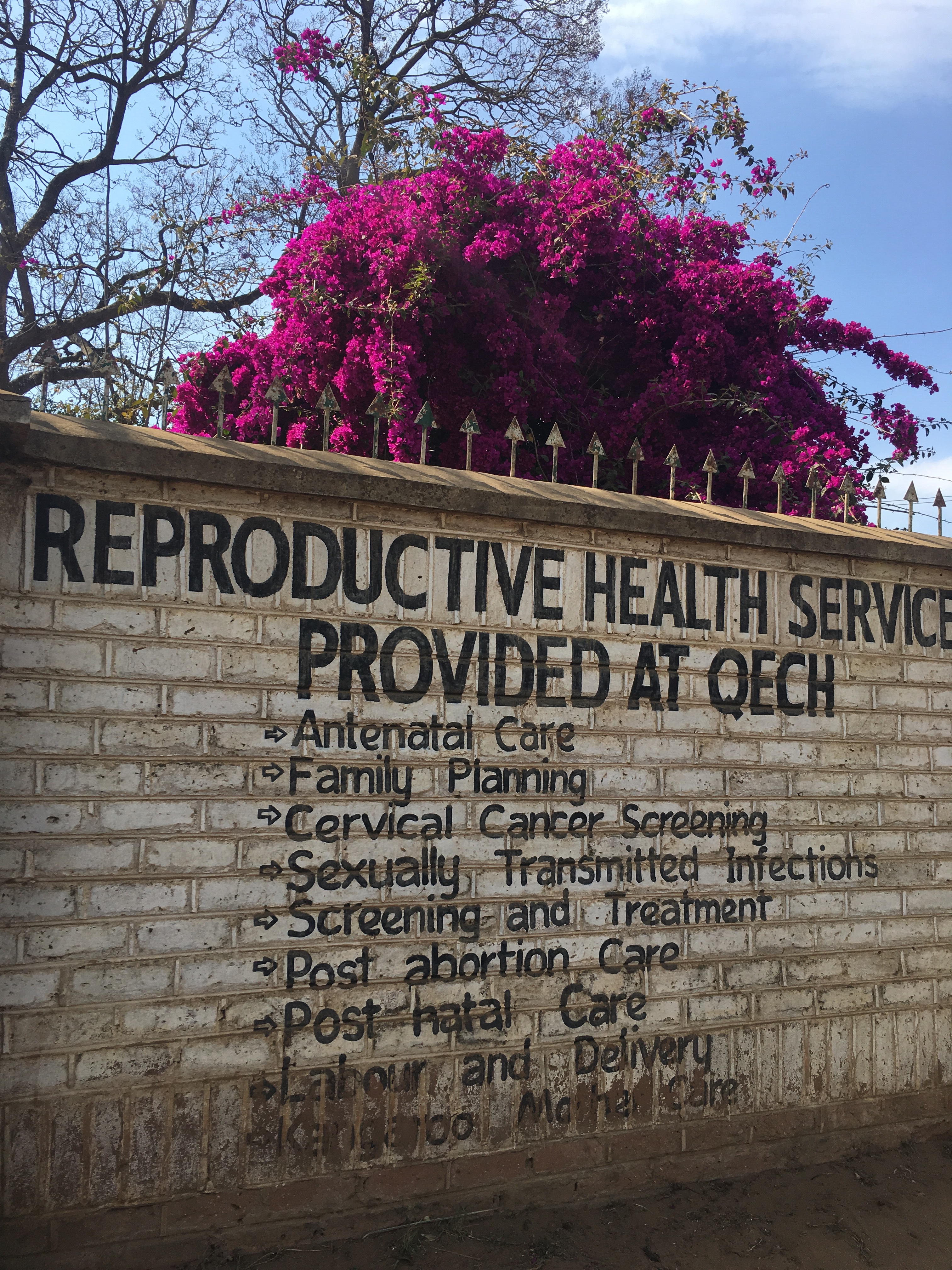
The last week has been very busy for all of the Ob/Gyn department here at the University of Malawi’s College of Medicine. It was exams week, a stress-filled week for the registrars and a week of prepping, evaluating, and concern for the consultants.
The first time I was introduced to the long, involved process of examining the registrars was about a month ago, shortly after I arrived. I sat in on a meeting where the faculty reviewed the multiple choice questions that make up the MCQ part of the exams. After saying a few times that I didn’t understand a question or that something was spelled wrong (and being treated much nicer than I deserved to be treated when they assured me that the question DID make sense to them and that WAS the proper – English – way to spell), I decided that my best contribution at that point would be to be quiet. I remember being relieved that I was not taking the test, as there were basic science questions about several proteins that haven’t even been found when I was in medical school.
For the two weeks leading up to the exams, the senior registrars are given time off from their clinical duties to study, so the clinics and wards have been short-staffed and I was pressed into clinical work on occasion. The results were frustration on my and my reluctant interpreters’ part, and multiple calls to Drs. Mvula and Gadama with questions about the availability of certain medications or procedures here. I suspect everyone concerned is glad that I won’t be doing that often!
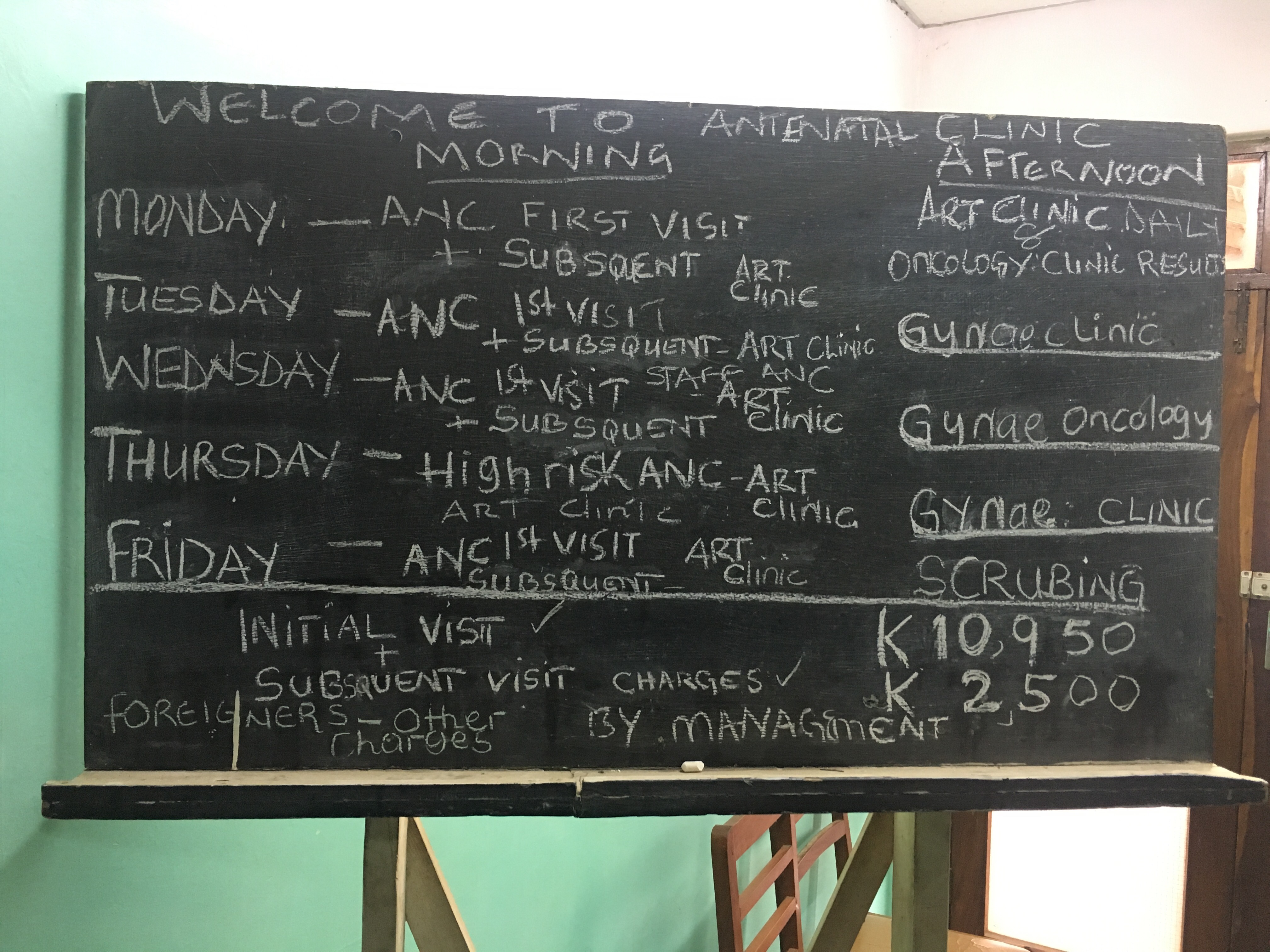
On Sunday, Sept. 1, the majority of the obstetricians and gynecologists in the country of Malawi met at a downtown hotel for almost 9 hours in preparation for the exams that started the next day. The consultants (attendings) that I work with were joined by several consultants from Lilongwe, as well as a young American woman who is doing her UCSF/Partners in Health fellowship in global health at a small town about a three-hours-drive from Blantyre, and a Malawi-American physician who now works with the global health fellows at the Baylor and Loma Linda Universities’ programs here. One of the recent graduates of the University of Malawi program has recently returned to Blantyre and is working with Medicins Sans Frontieres (MSF, or Doctors Without Borders) cervical cancer treatment program and he also joined us. We reviewed the questions for the MCQ portion, finalized the short answer and long essay questions and prepared for the OSCE portion and the scenarios for the oral clinical hour-long exams.
One thing I found interesting was during the review of the MCQ, we went over all the exam questions and all of the consultant had to rate each question as easy, average or difficult. The scores were then tallied and a passing grade derived by that evaluation of the questions. The short and long essay questions had not yet been assigned marking schemes, so we were each given assignments to research the answers to a specific questions and then come up with how many points given for each part of the question answered appropriately. (One of the questions I had to devise the marking scheme for was an anatomy question and those of you who knew me in med school are probably laughing at the irony. Let’s just say it was not my strongest subject.). I ended up using UpToDate and Google to come up with good complete answers and then assign the points. In the process, I reviewed a lot of information, and learned even more new things.
The next day, we met in a conference room and continued our work to prepare for the next three days (the actual exams were Monday through Thursday for 3 hours each morning). Once the first day’s exams were written, we started grading. The MCQs were easy to grade, but the essay tests had to be graded by at least two people and if there was a discrepancy in the scores, they had to be graded by “tie-breakers” until a score was agreed upon. Several of the essay answers needed to be graded by 4 or 5 people in an effort to be as objective as possible.
Even though Malawi does not have some of the clinic resources that I would take for granted, the registrars are expected to know about them. At one point, we were discussing a fetal monitor strip interpretation and I realized that the majority of the people there had not really ever practiced where there is continuous fetal monitoring and I was probably the most expert person there on that particular point. On the other hand, questions about the appropriate treatment of malaria during pregnancy or HIV treatment regimens are something the physicians here know well and I am still trying to learn. The registrars are expected to know it all and were thoroughly tested on it.
We were working hard and stayed late for the rest of the week, but everything was done by Thursday night. All six of the senior registrars who had sat for the final exams passed and the consultants celebrated that night with a nice dinner. This week had been the first time I had met or talked many of the physicians, so it was fun to have a little social time before we went back to our everyday work.
 A Physician Educator in Malawi
I love your stories and you are very good at writing. It all flows well and my sentences are so choppy. Are you going to be there a full year? I was so surprised to hear from you in Malawi because the last time we saw each other and talked you were going to move to San Francisco were it’s cooler because of your hot flashes. So how is Malawi serving you on that? Be comforted to know that at 78 I still have them!☹️😆😆😆😆😆😆They are not as frequent though.
Is Quinn coming out for Christmas? I thought I read somewhere that she was. What goals does Quinn have in life and do you think they may change once she visits Malawi and sees the service you are providing?
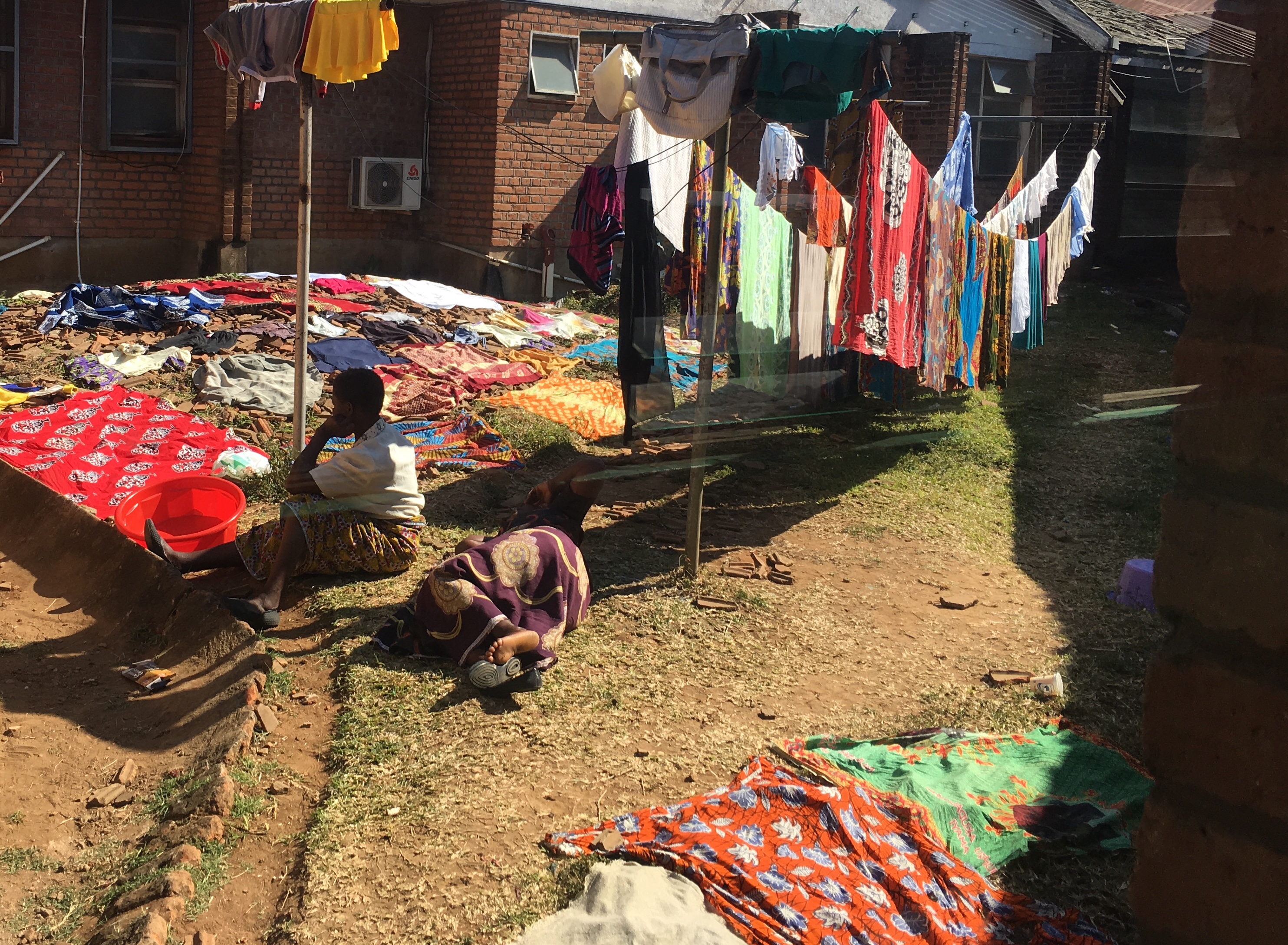
I understand liking the vibrant colors in their clothes on the line. As a young girl we hung our laundry on the line and it’s still something I like to do although you can no longer find clothes lines. Is chitenge the wrap that they wear or the name of a fabric like cotton? I noticed someone was asleep on the ground. Is this to guard their laundry?
Looking forward to hearing another story from you. Your experience there is very hard work and challenging. However, you are meeting so fascinating people.
LikeLike
Hello Elizabeth! It’s still spring here and the weather has been lovely, so no problems so far…
Jessica plans on coming out to visit me during winter break. She is doing well at CSU-Long Beach and even taking surfing as one of her classes this semester!
I’m not sure whether the name chitenge refers to the wrapping itself or to the cloth. I have had some clothes made out of the cloth and my colleagues always comment on them when I wear them.
I’m sorry that I’m not posting more, but much of my life now involves rounding with medical students at the hospital and as you know, hospitals can be very sad places.
Much love to you! Cathy
LikeLike
Love reading your blog Cathy! Miss you and hope you are happy! ❤️
LikeLike
Much love to you, Leslie! Sorry to miss the fabulous Kezmoh Halloween party this year!
LikeLike