Author: drbakermalawi

Zambia

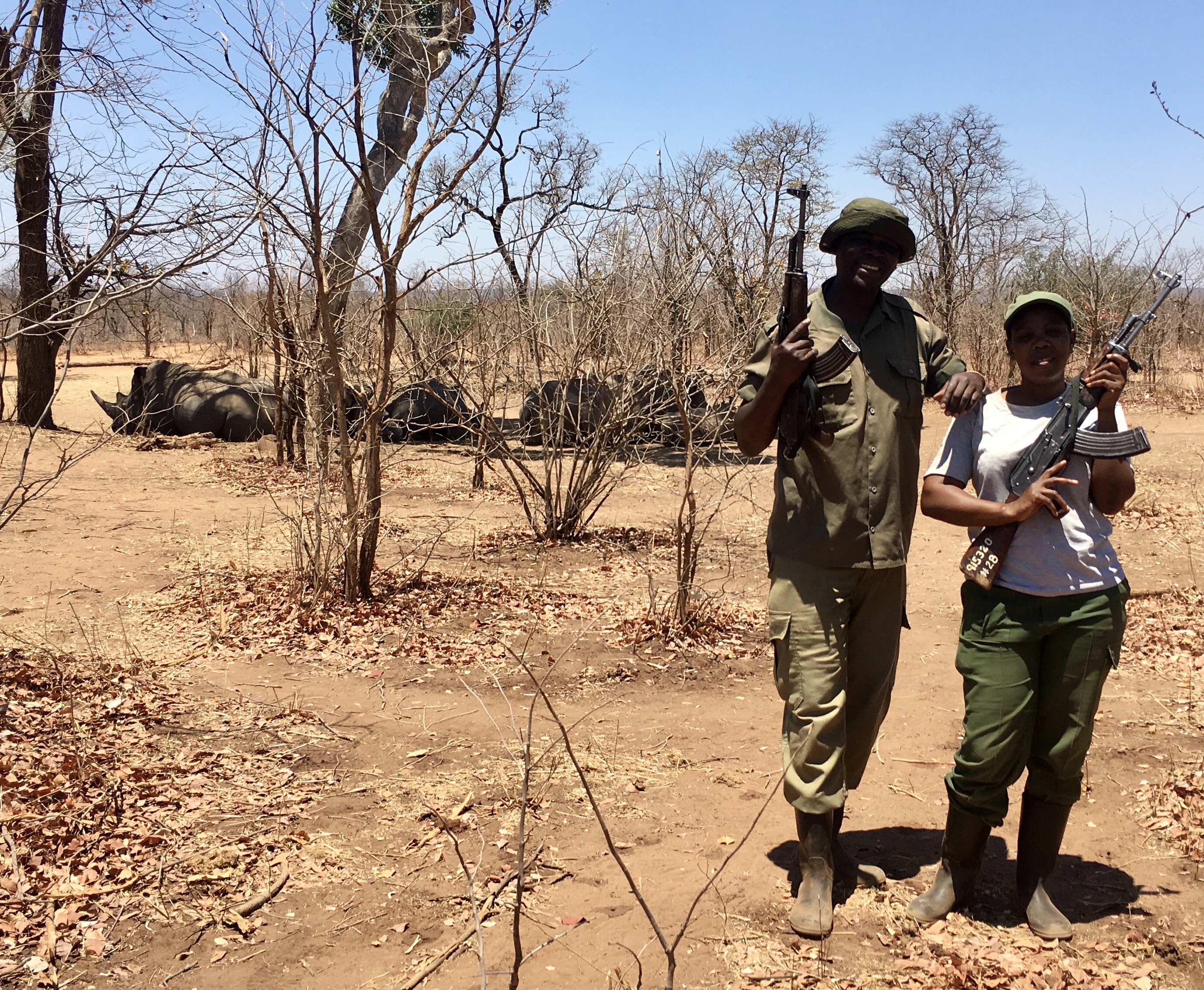
Of course, while we were traveling, we wanted to see more than Victoria Falls. The next day we went on a safari to a park near the town of Livingstone, named after the Falls, Mousi-ou-Tunya. The highlight of the safari was the rhino walk, where you are allowed to get (sort of) close to the family of rhinoceros that live there. They have their own around-the-clock armed guards. The guards told us that the guns were not to protect us from the rhinos, but to scare off any poachers. And so far it has worked.

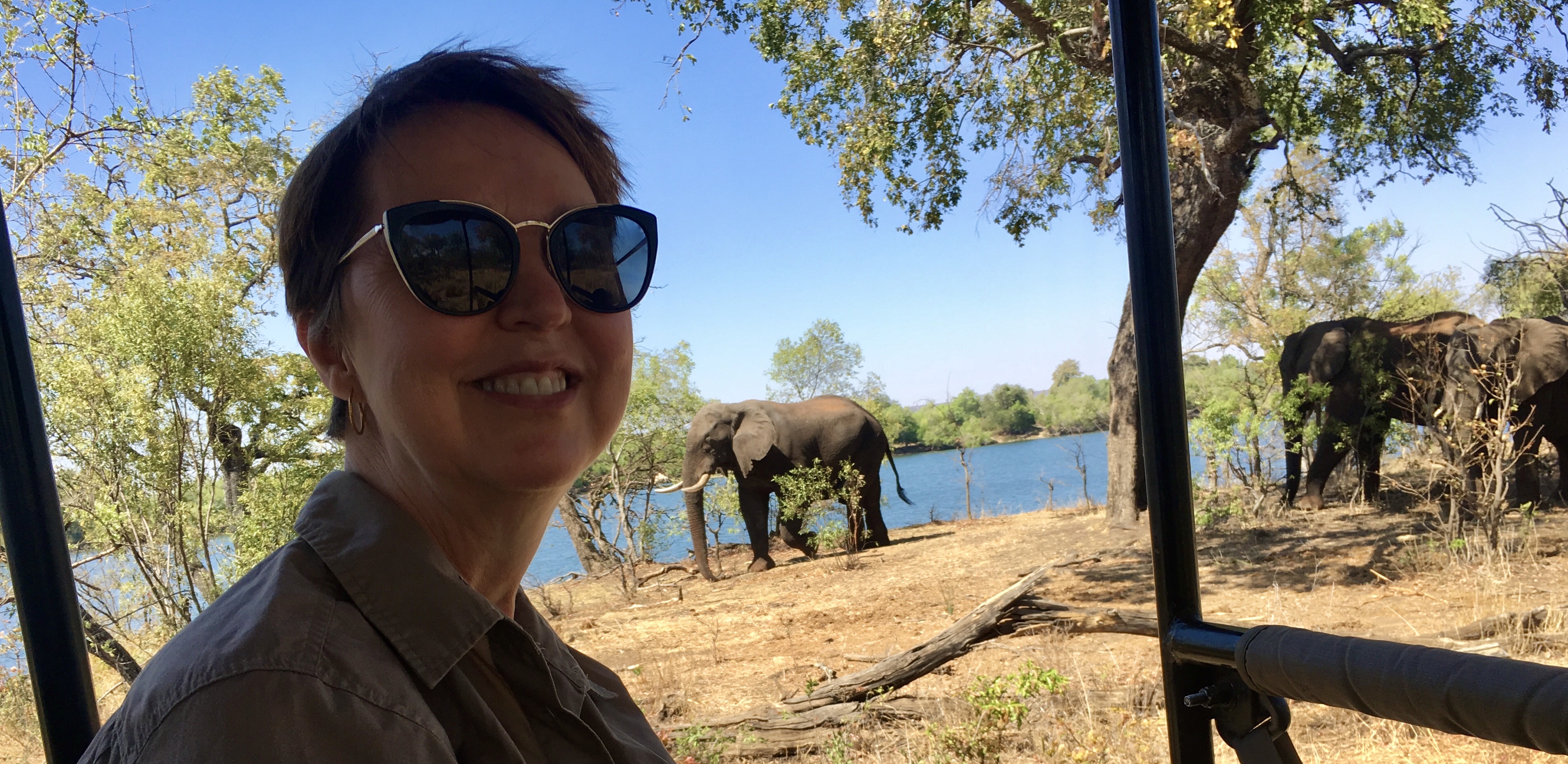
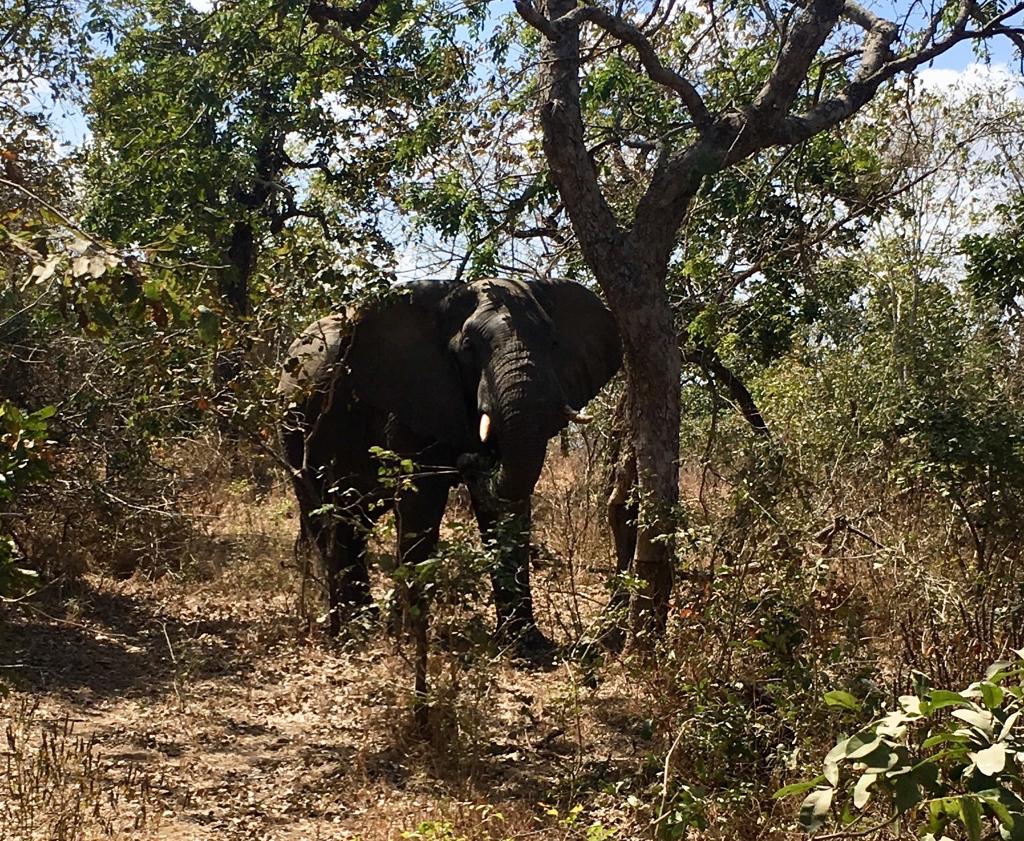
Elephants on safari. The main road to our hotel was an elephant corridor and we saw them block traffic while they crossed the road. The largest male would take a threatening pose at the cars he was facing until the family of elephants had completely cross. We were in a minivan and a small car in front of us moved behind us, presumably because they were afraid of the elephants. If an elephant is around, bicyclists would move to the center of the road so that they were protected by the cars around them from a potentially irate elephant.

Zebras in Zambia!

This giraffe lives on the grounds of a resort and was not worried that it was attracting attention. Best photo of a giraffe I’ll ever get.

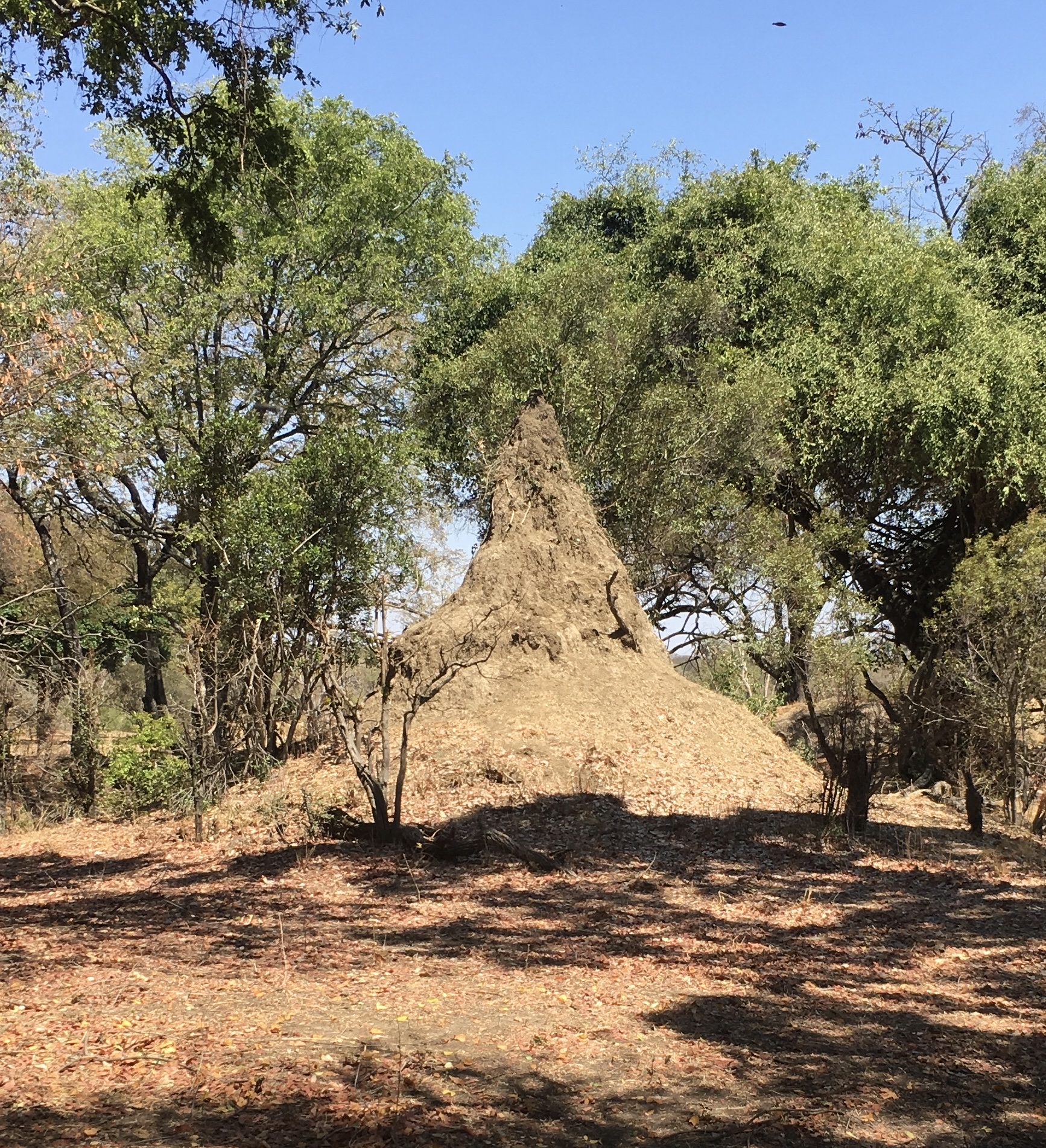
Largest ant hill I’ve ever seen.

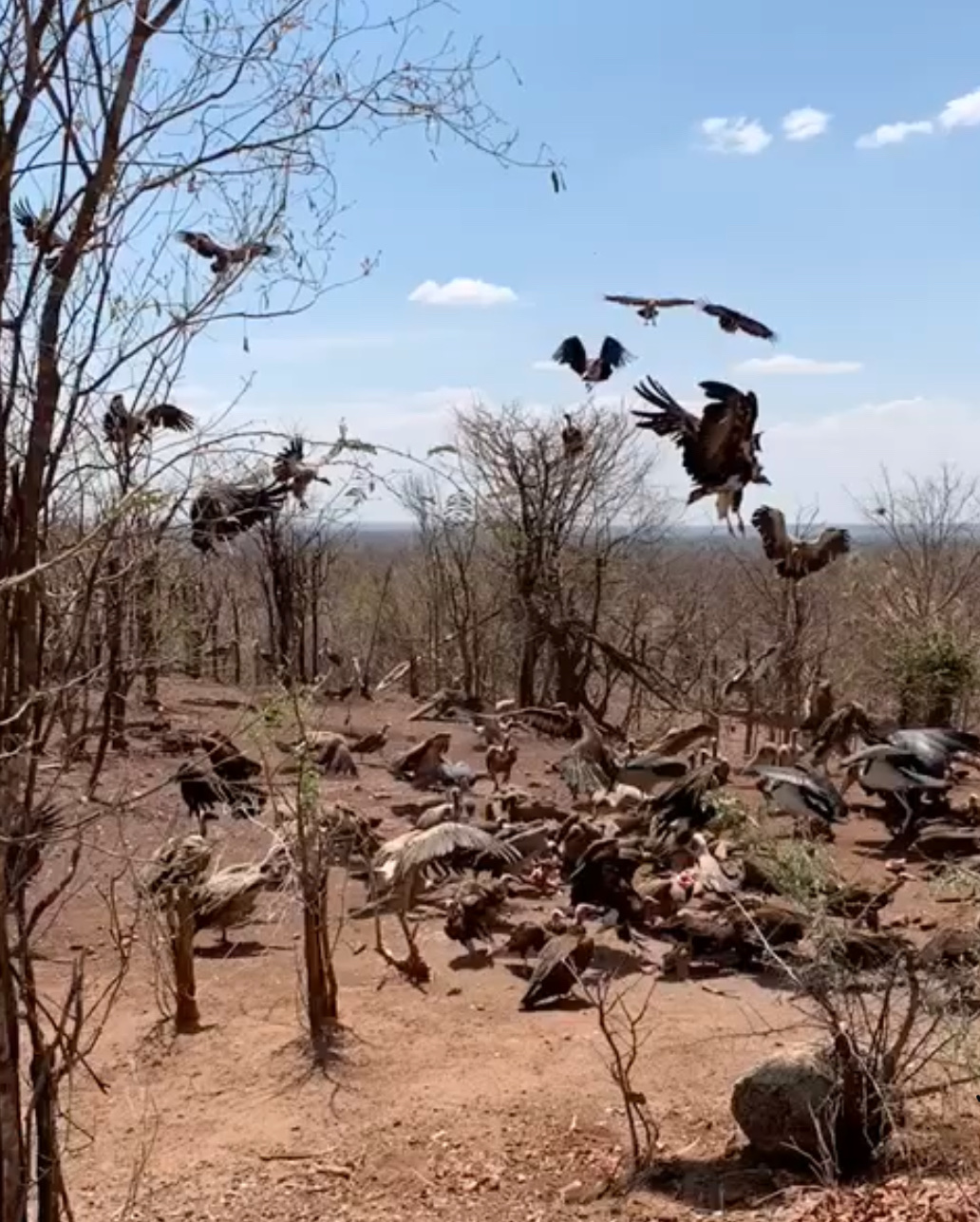
The Safari Lodge in Victoria Falls, Zimbabwe has a free 1 o’clock feeding of the vultures that we attended. I highly recommend it.

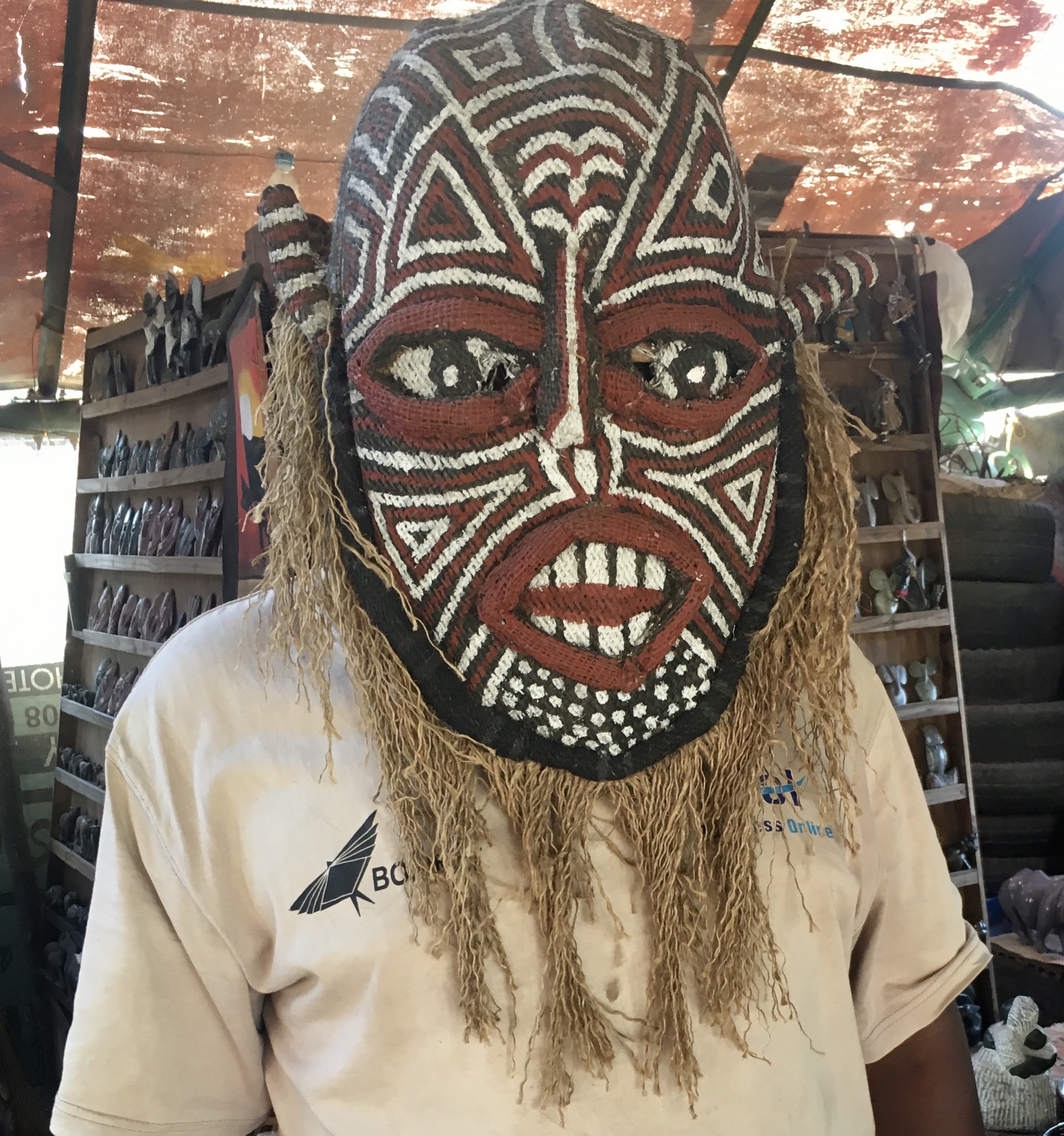
A traditional ceremonial mask of the Makhishi tribe.

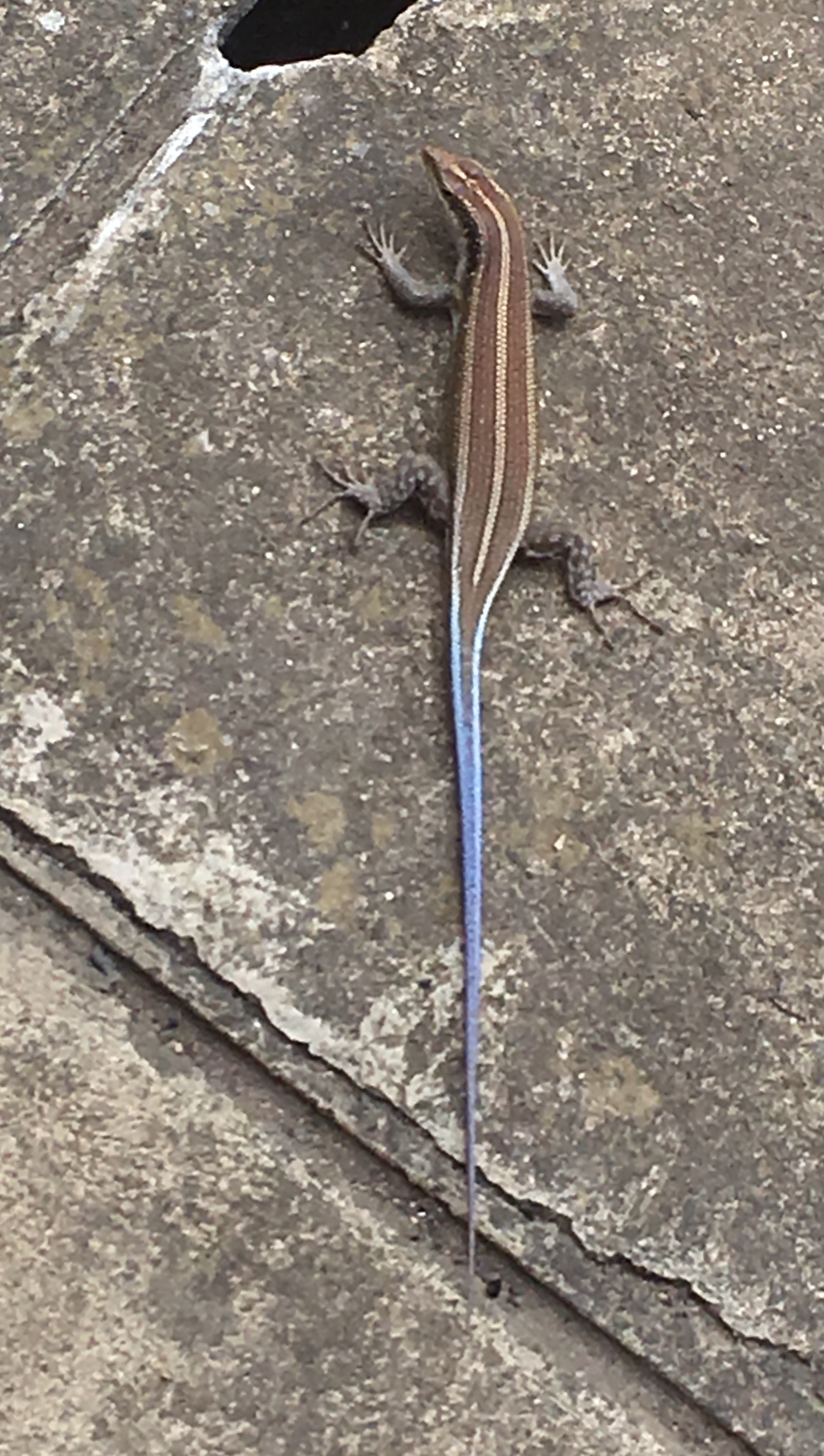
Closer to home, a beautiful lizard right outside my house.

Victoria Falls

My tourist visa to Malawi was scheduled to expire October 12 and my Temporary Employment Permit (TEP) has not yet been issued. The usual expat response is to drive to the Malawi border, pay for a new visa and immediately return, but we had a more adventurous plan – we were going to take a short trip and visit Victoria Falls, the largest waterfall in the world. We would leave the country, pay for our new visa on the way back as required, and get to visit an African landmark in the meantime.

It’s about 827 miles from Blantyre, Malawi to Livingstone, Zambia and it took us three flights and most of Saturday to get there. If we would have driven, we would have gone through Malawi, Mozambique, and Zimbabwe, before getting to our lodge at near the southern border of Zambia.

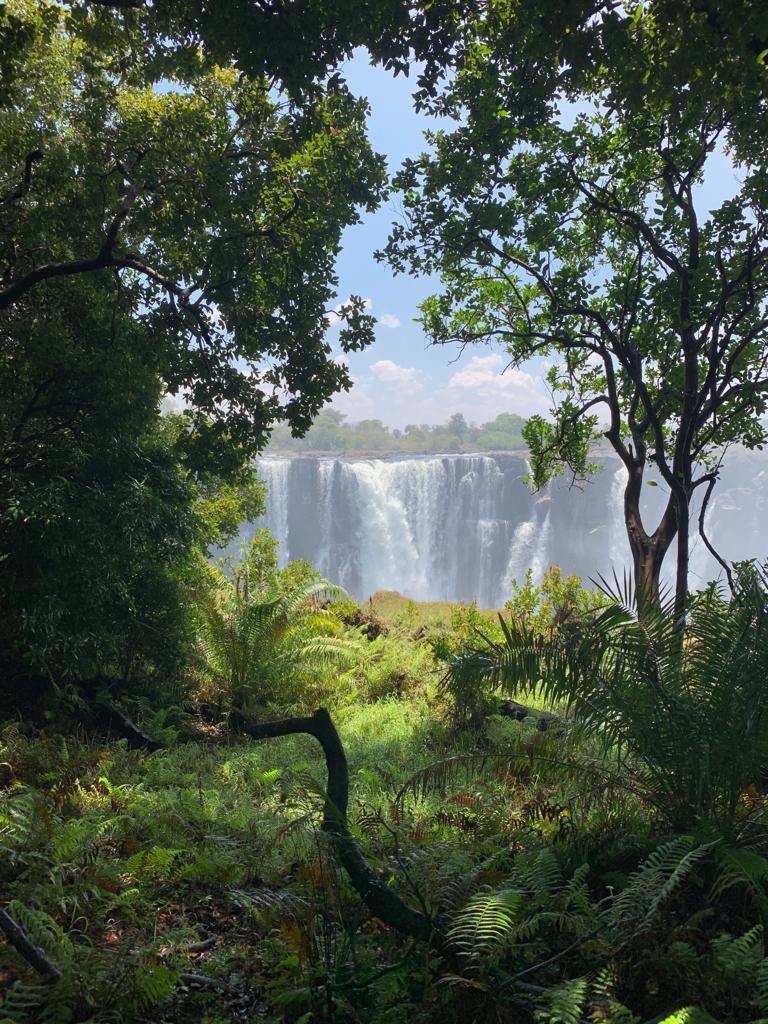
Victoria Falls is on the Zambezi River, which forms part of the border between Zimbabwe and Zambia. Its tourism supports two towns, Livingstone, Zambia and Victoria Falls, Zimbabwe, and if you want to see it from both sides, you need to get visas to both countries. October is the hot dry season and the water flow is reportedly about 10% of the high flow in April, when the rainy season swells the Zambezi River. Seeing it at low flow was still spectacular!

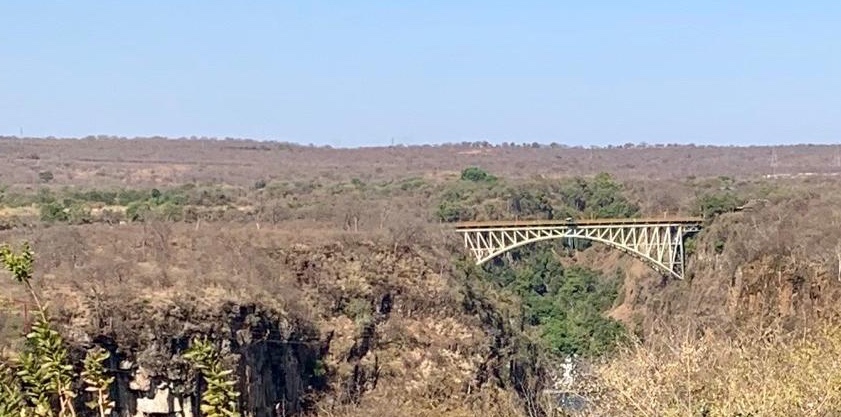
This is the bridge over the gorge and between the two countries. For the adventurous, it is possible to bungee jump, zip line, or swing into the gorge from this bridge. We saw rafting and kayaking in the canyon below. There is even a pool at the top of one of the waterfalls, Devil’s Pool, where (for a price) you can dive in and get your photo taken, sitting right on the edge of one of the falls.

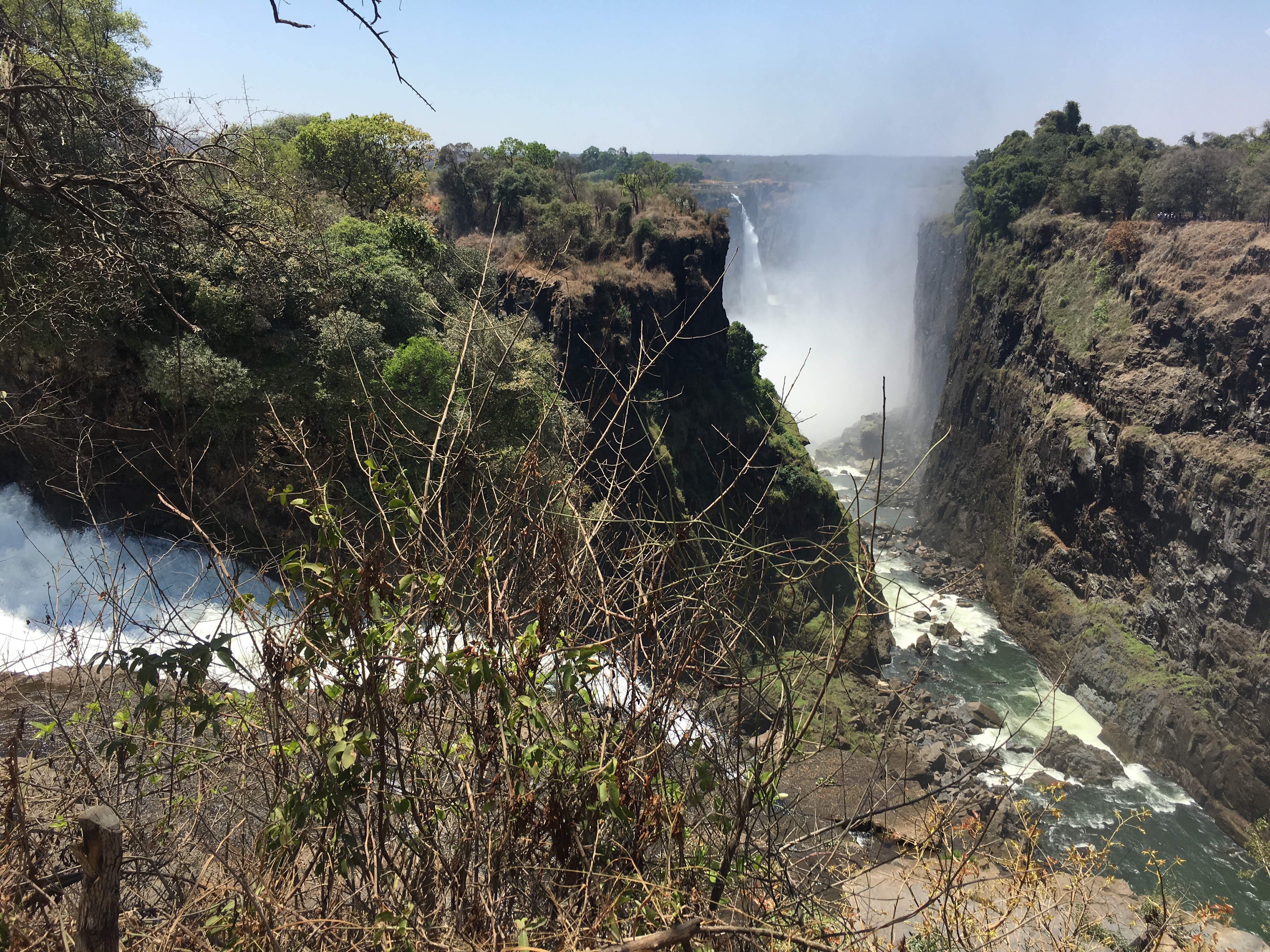
The local name for the falls is Mosi-ou-Tunya, which translates to “smoke that thunders,” referring to the mist that rises up from the falls and obscures the gorge below when the flow is high. One of the advantages of going in October was a beautifully clear view of the gorge, but you can still appreciate the mist cloud that is visible from miles away.

Saturday shopping

I usually do much of my grocery and household shopping on Saturday mornings. Many of the stores here close by 5 or 6 p.m. during the week, so there is limited time to run errands after work. Most stores are closed by Saturday afternoon until Monday morning for the weekends, so I don’t have much time to shop. Here are photos of things I saw at the stores today. As you know, I am easily amused, but I hope you can see some humor in them, too.

I was looking for a small radio so that I can listen to BBC in the mornings. No radios at the local store, but two kinds of fancy bill counters.
A cream with sharks and caviar essence for shrinkage and smooth the vagina. No, I didn’t buy it.
What’s for dinner tonight? Chicken heads and flatties, honey! (Seriously, you have to admire that they appear to use the entire chicken.)
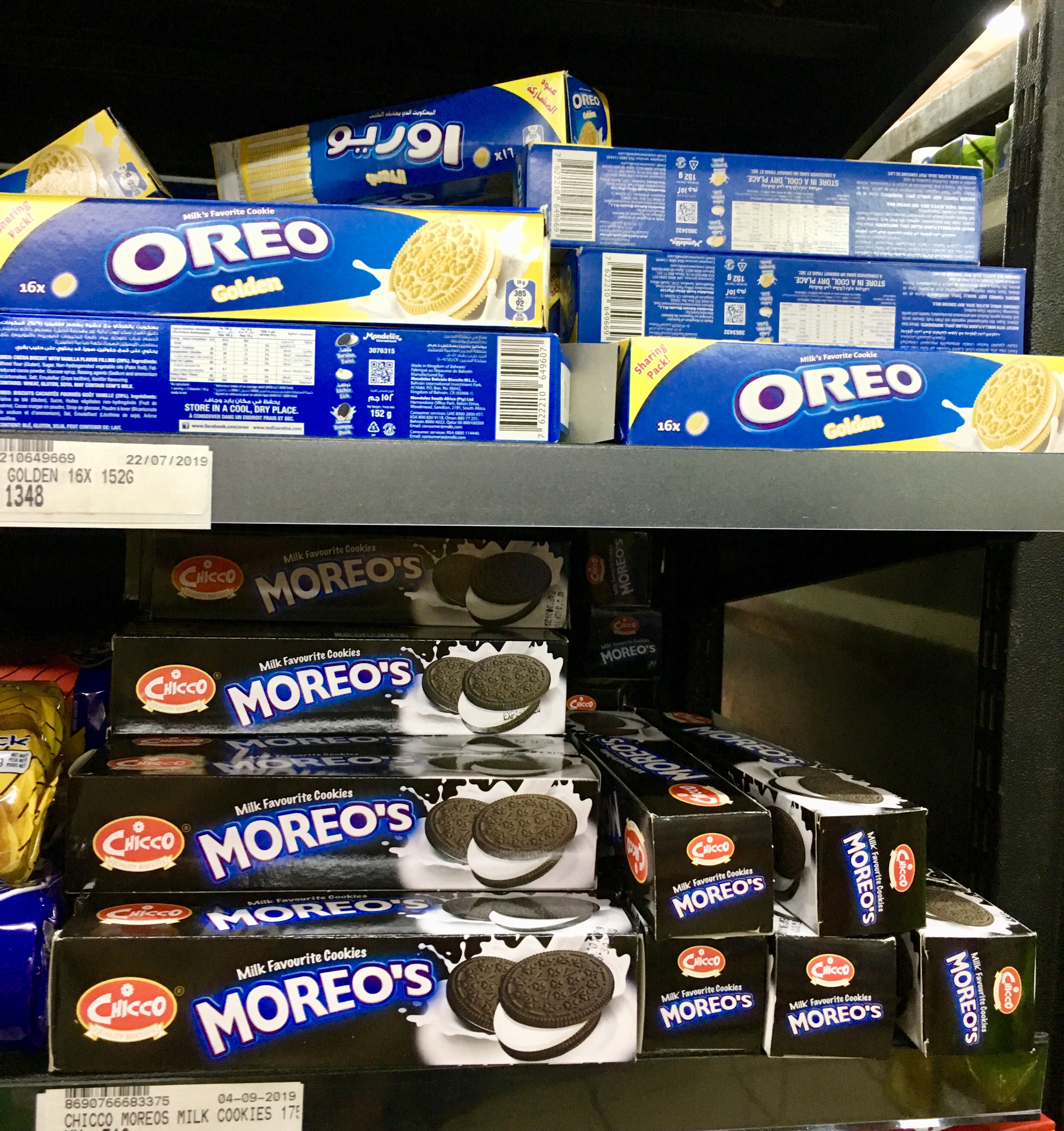
Golden Oreo cookies not your thing? Try Moreo’s for a lot less kwacha.
For my vegan friends: yes, you can occasionally find some special treats here, but this is the first time I’ve seen these.
I’m pretty sure that I don’t need these, but I love the idea!
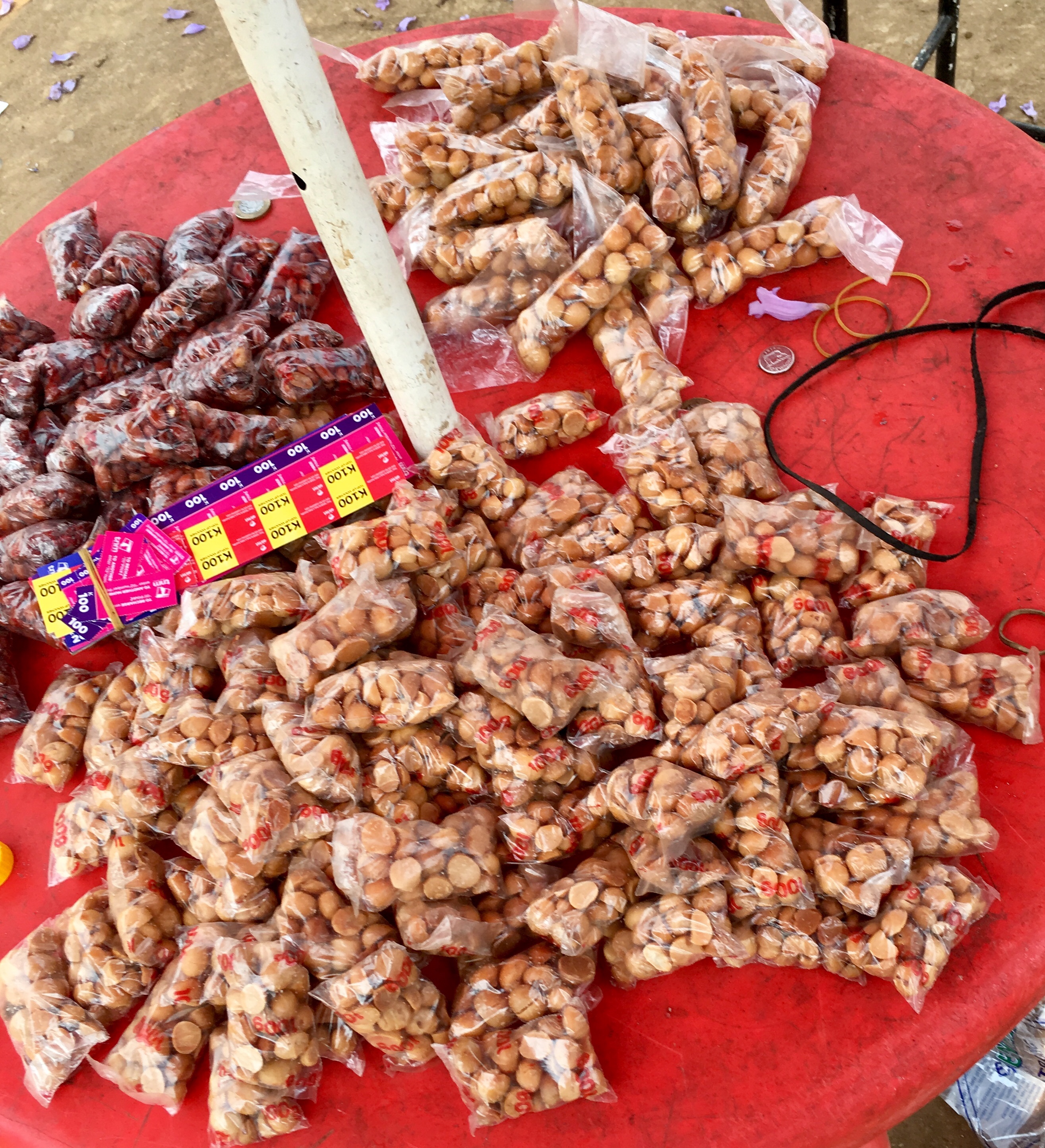
One of my favorite treats here: Roasted macadamia nuts in small packages. The small packs in front cost around 14 cents, the longer ones in back about 21 cents.

Exam week

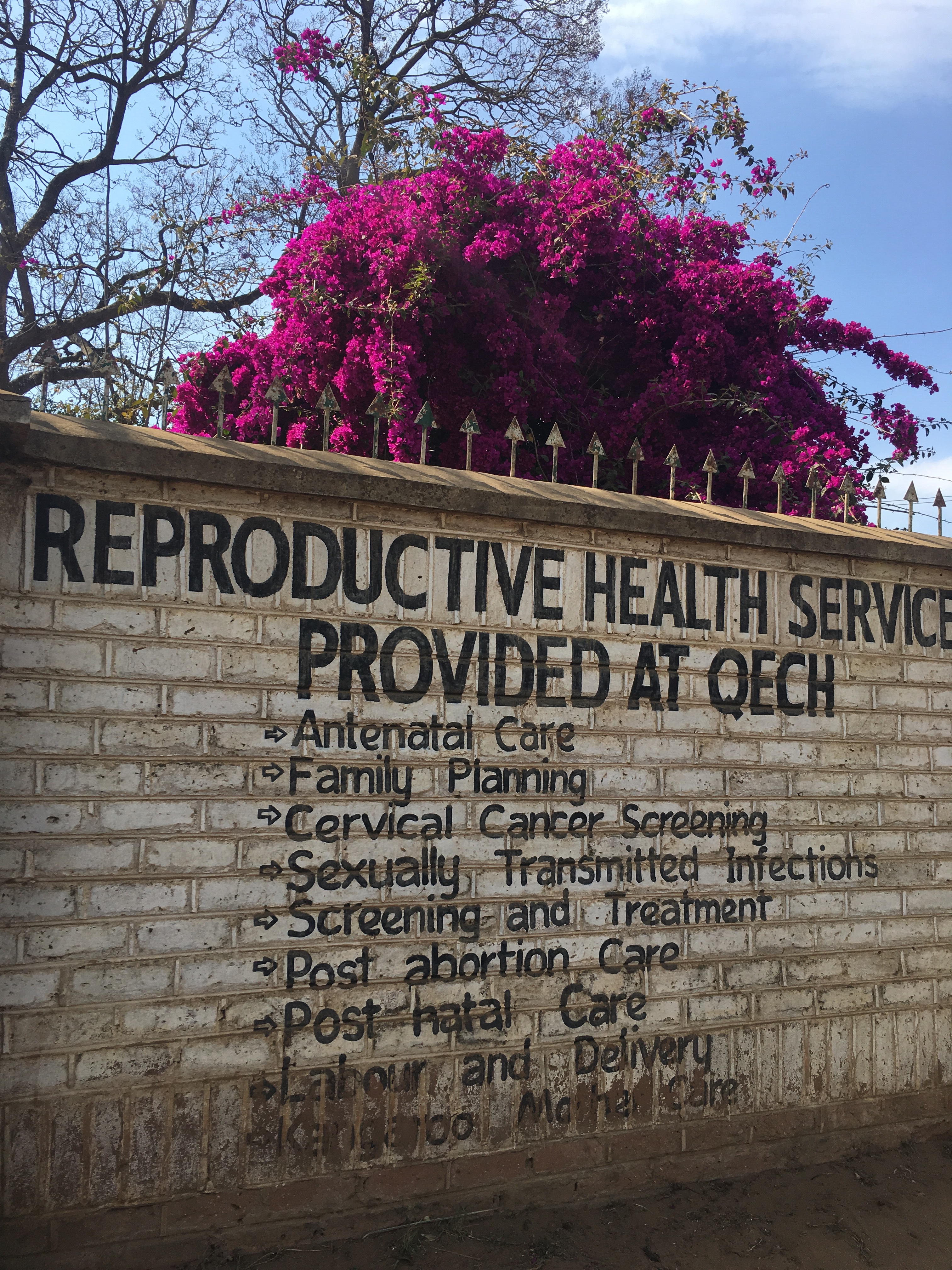
The wall outside Queen Elizabeth Central Hospital, Blantyre, Malawi

The last week has been very busy for all of the Ob/Gyn department here at the University of Malawi’s College of Medicine. It was exams week, a stress-filled week for the registrars and a week of prepping, evaluating, and concern for the consultants.

The first time I was introduced to the long, involved process of examining the registrars was about a month ago, shortly after I arrived. I sat in on a meeting where the faculty reviewed the multiple choice questions that make up the MCQ part of the exams. After saying a few times that I didn’t understand a question or that something was spelled wrong (and being treated much nicer than I deserved to be treated when they assured me that the question DID make sense to them and that WAS the proper – English – way to spell), I decided that my best contribution at that point would be to be quiet. I remember being relieved that I was not taking the test, as there were basic science questions about several proteins that haven’t even been found when I was in medical school.

For the two weeks leading up to the exams, the senior registrars are given time off from their clinical duties to study, so the clinics and wards have been short-staffed and I was pressed into clinical work on occasion. The results were frustration on my and my reluctant interpreters’ part, and multiple calls to Drs. Mvula and Gadama with questions about the availability of certain medications or procedures here. I suspect everyone concerned is glad that I won’t be doing that often!

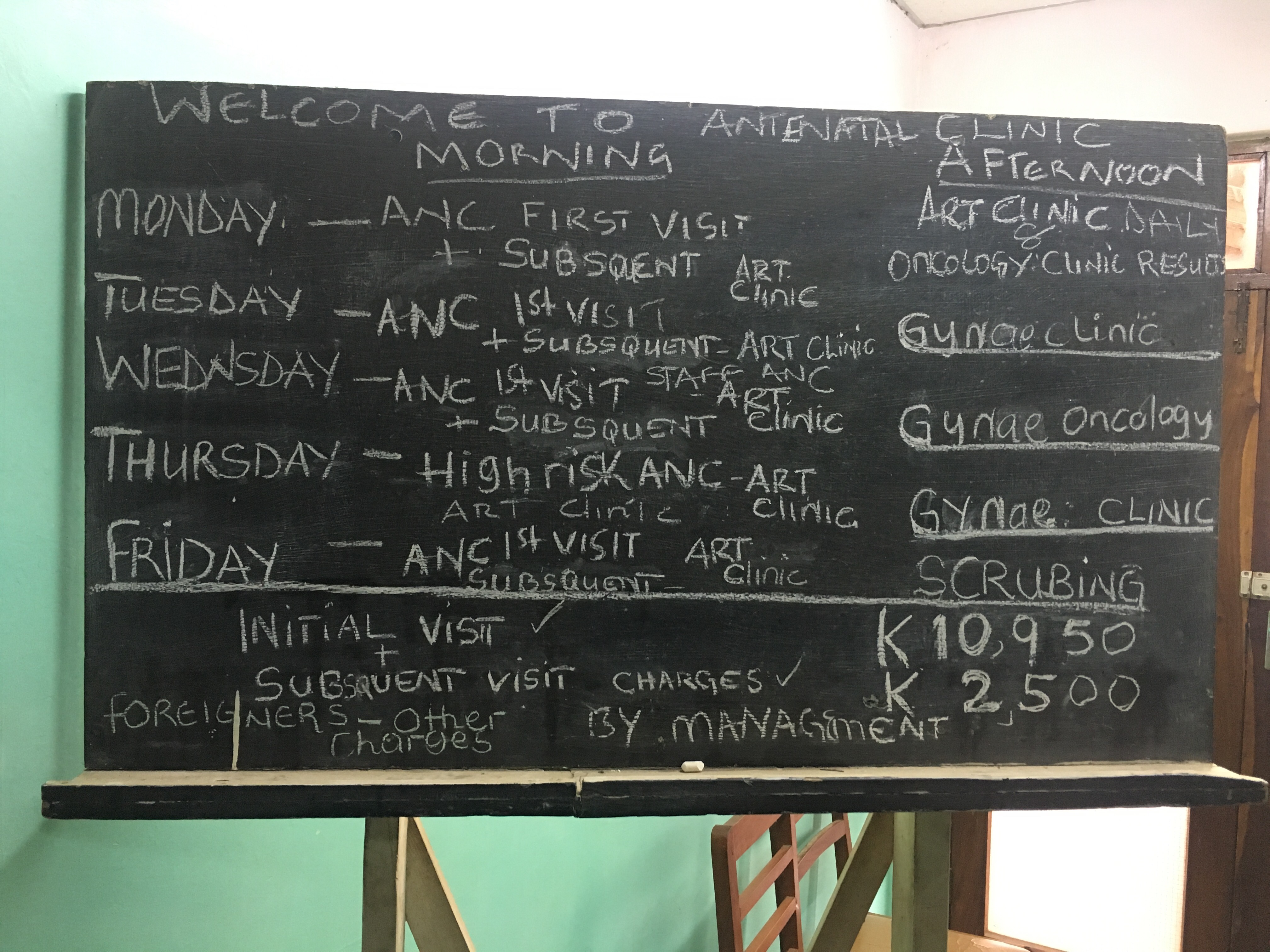
The clinic schedule

On Sunday, Sept. 1, the majority of the obstetricians and gynecologists in the country of Malawi met at a downtown hotel for almost 9 hours in preparation for the exams that started the next day. The consultants (attendings) that I work with were joined by several consultants from Lilongwe, as well as a young American woman who is doing her UCSF/Partners in Health fellowship in global health at a small town about a three-hours-drive from Blantyre, and a Malawi-American physician who now works with the global health fellows at the Baylor and Loma Linda Universities’ programs here. One of the recent graduates of the University of Malawi program has recently returned to Blantyre and is working with Medicins Sans Frontieres (MSF, or Doctors Without Borders) cervical cancer treatment program and he also joined us. We reviewed the questions for the MCQ portion, finalized the short answer and long essay questions and prepared for the OSCE portion and the scenarios for the oral clinical hour-long exams.

One thing I found interesting was during the review of the MCQ, we went over all the exam questions and all of the consultant had to rate each question as easy, average or difficult. The scores were then tallied and a passing grade derived by that evaluation of the questions. The short and long essay questions had not yet been assigned marking schemes, so we were each given assignments to research the answers to a specific questions and then come up with how many points given for each part of the question answered appropriately. (One of the questions I had to devise the marking scheme for was an anatomy question and those of you who knew me in med school are probably laughing at the irony. Let’s just say it was not my strongest subject.). I ended up using UpToDate and Google to come up with good complete answers and then assign the points. In the process, I reviewed a lot of information, and learned even more new things.

The next day, we met in a conference room and continued our work to prepare for the next three days (the actual exams were Monday through Thursday for 3 hours each morning). Once the first day’s exams were written, we started grading. The MCQs were easy to grade, but the essay tests had to be graded by at least two people and if there was a discrepancy in the scores, they had to be graded by “tie-breakers” until a score was agreed upon. Several of the essay answers needed to be graded by 4 or 5 people in an effort to be as objective as possible.

Even though Malawi does not have some of the clinic resources that I would take for granted, the registrars are expected to know about them. At one point, we were discussing a fetal monitor strip interpretation and I realized that the majority of the people there had not really ever practiced where there is continuous fetal monitoring and I was probably the most expert person there on that particular point. On the other hand, questions about the appropriate treatment of malaria during pregnancy or HIV treatment regimens are something the physicians here know well and I am still trying to learn. The registrars are expected to know it all and were thoroughly tested on it.

We were working hard and stayed late for the rest of the week, but everything was done by Thursday night. All six of the senior registrars who had sat for the final exams passed and the consultants celebrated that night with a nice dinner. This week had been the first time I had met or talked many of the physicians, so it was fun to have a little social time before we went back to our everyday work.

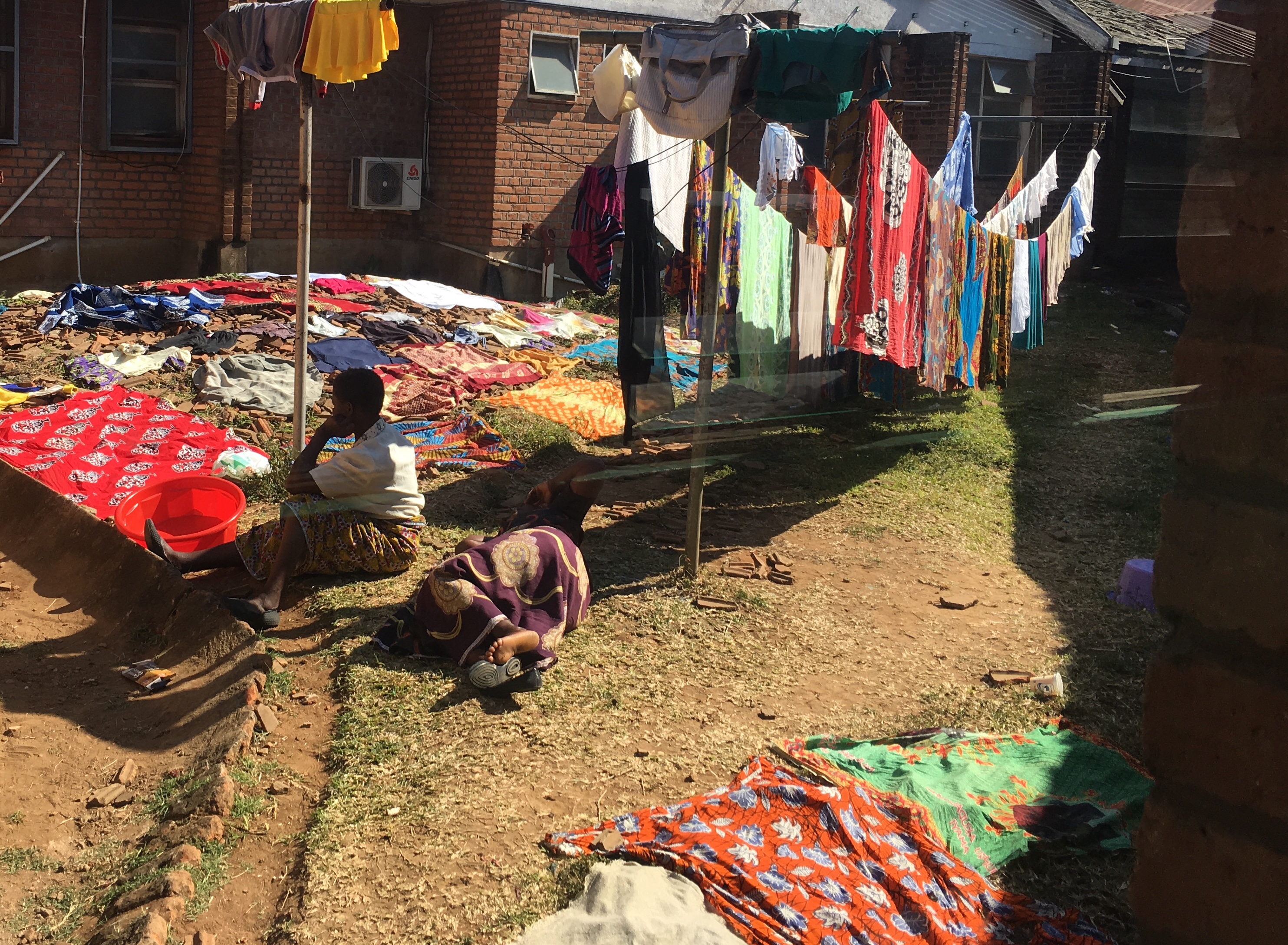
Laundry day at the hospital. I walk by this sight every morning and love the variety of colors on display. The cloths are chitenge, a skirt-like wrap worn traditionally by the Malawi women.

Spring

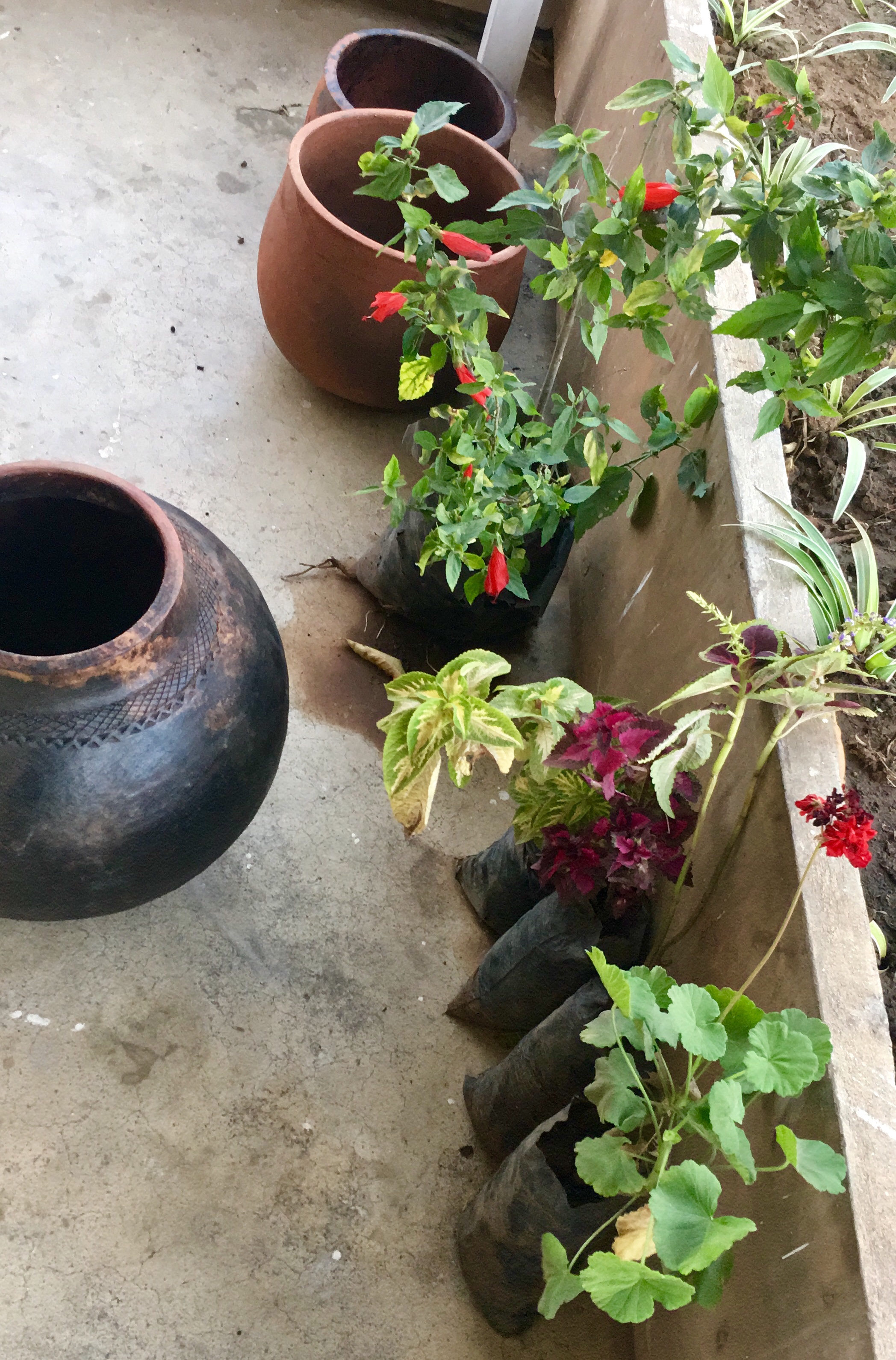
Plants and pots

The weather is getting warm here. Blantyre’s winter weather felt like a California spring, so I’m a bit worried about the summer heat to come. The summer is also the rainy season and I am looking forward to seeing how green it gets!

On Saturday, August, 24, we used the tropical spring weather as an excuse to shop for plants for our patios. Kathy Beach was a dedicated gardener at her Maine home and here marvels aloud often how well everything grows. I had gotten a tip about a good plant nursery from Gladys Gadama, and knew it wouldn’t be hard to talk Kathy and Chris into coming with me to check it out. (Shelley was working and she missed the fun.)

The recommended nursery had a good selection of plants and we picked out a few favorites. But then we wanted some locally-made pots to plant them in. That morning, Kathy’s neighbors had recommended a place to buy pots – a road-side shop about 30 kilometers away, on the road to Zomba. Normally, we might balk at the expense of the trip, but it was a beautiful Saturday morning, we needed pots, and it was a chance to see a new area.

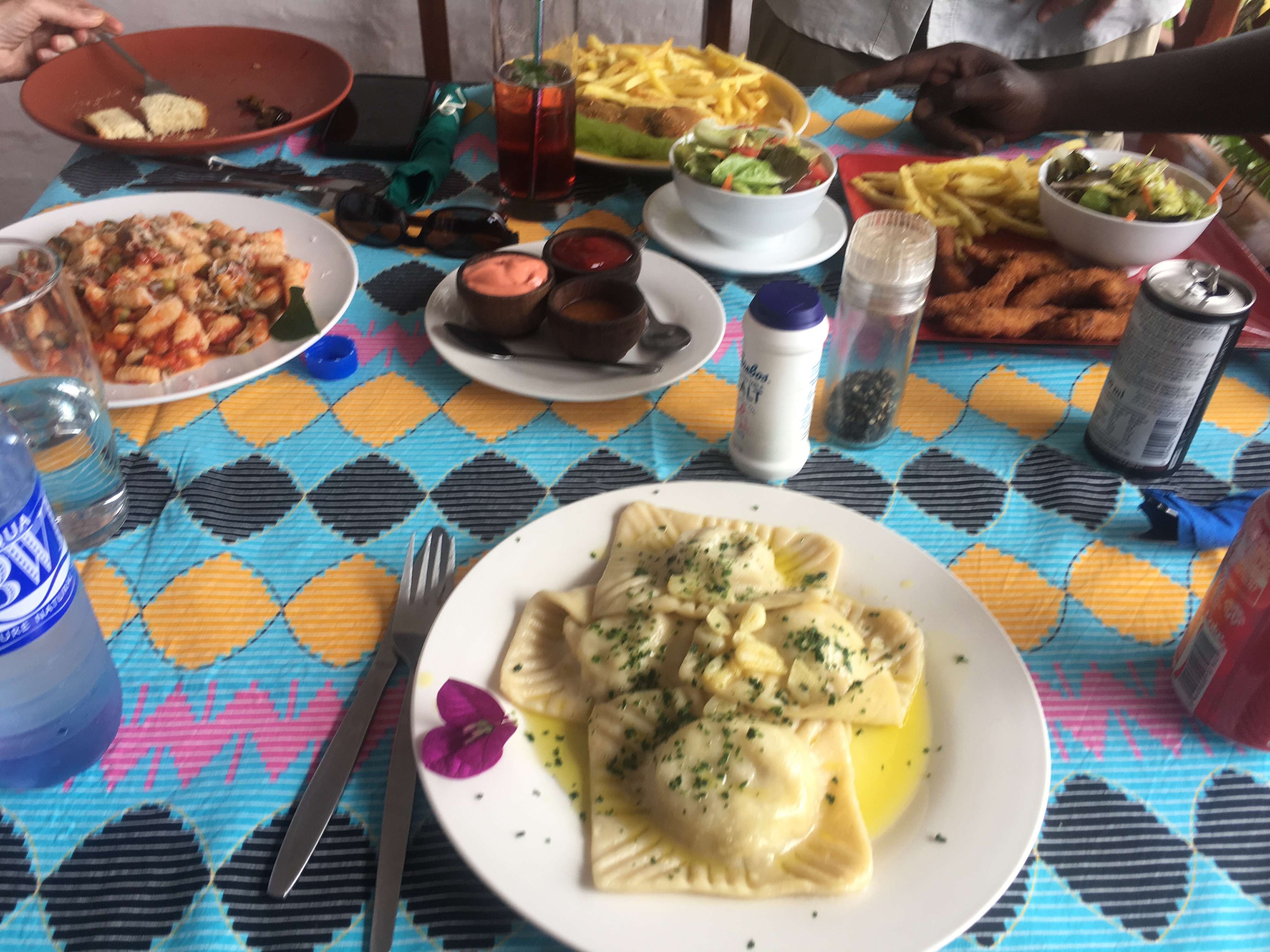
Zomba is reportedly one of the prettiest towns in Malawi and is about an hour’s drive from Blantyre. The drive to the pot shop had been pleasant and we were feeling both spontaneous and hungry, so our driver, Bright, agreed to take us about another 30 kilometers to the town of Zomba for lunch. TripAdvisor helped us pick out a local restaurant and we ate a delicious lunch while enjoying the view of their beautiful garden, including a hammock where monkeys and baboons were playing. We could see the Zomba Plateau in the distance and it looked inviting. We were running out of daylight and couldn’t continue traveling to the Plateau, but I hope to see more of it soon!

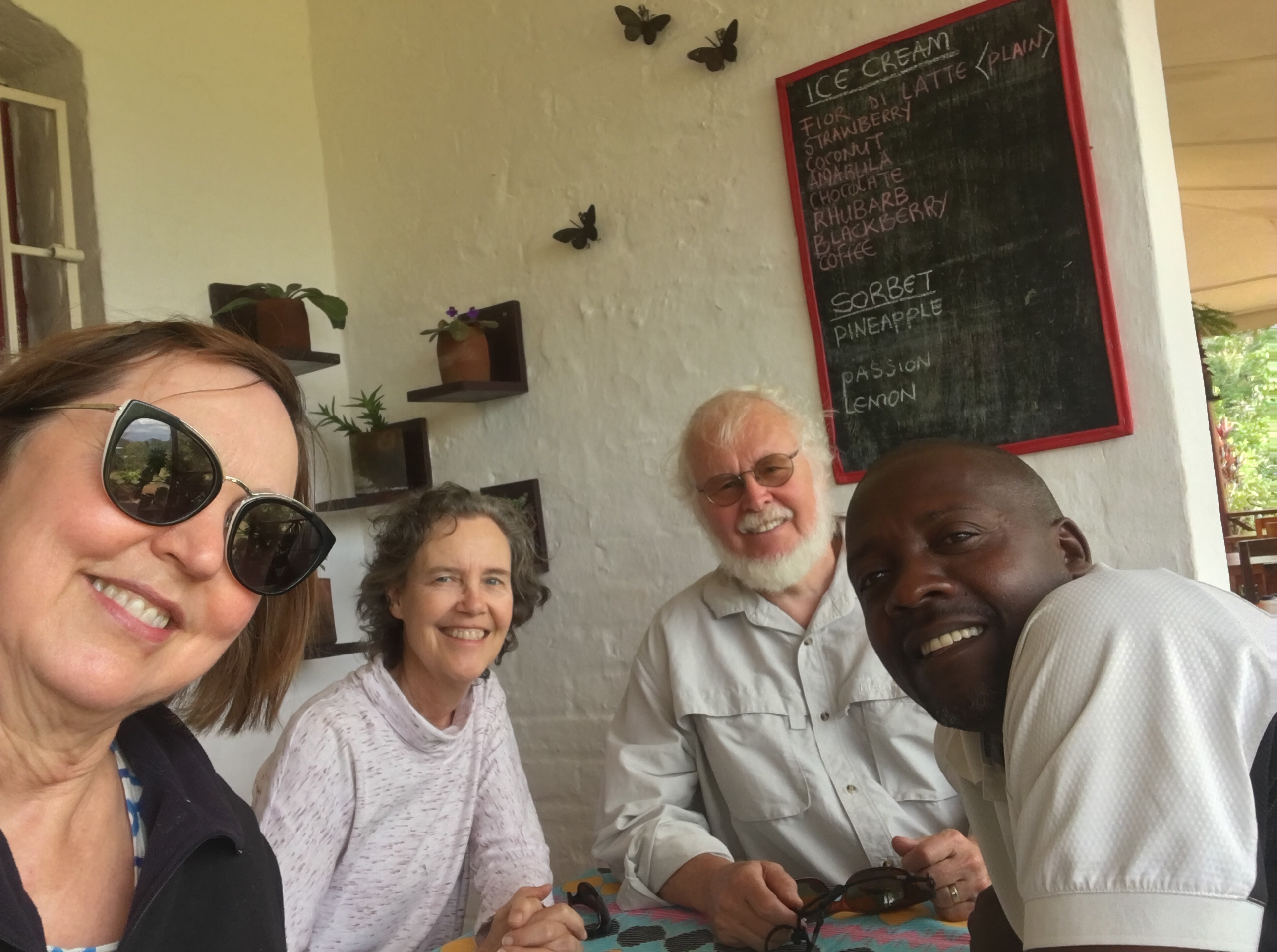
Me, Kathy, Chris, and Bright at lunch
Lunch!
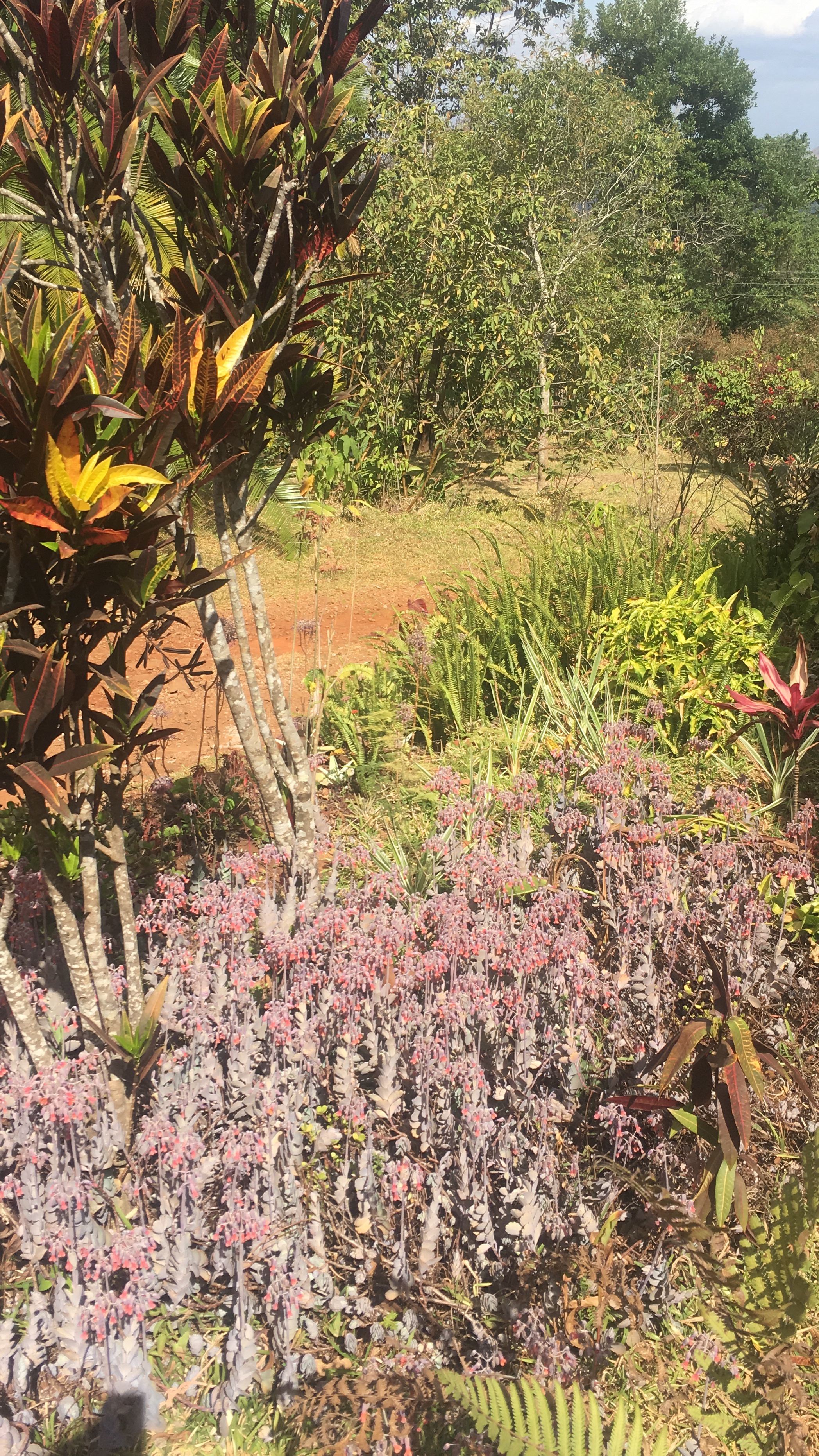
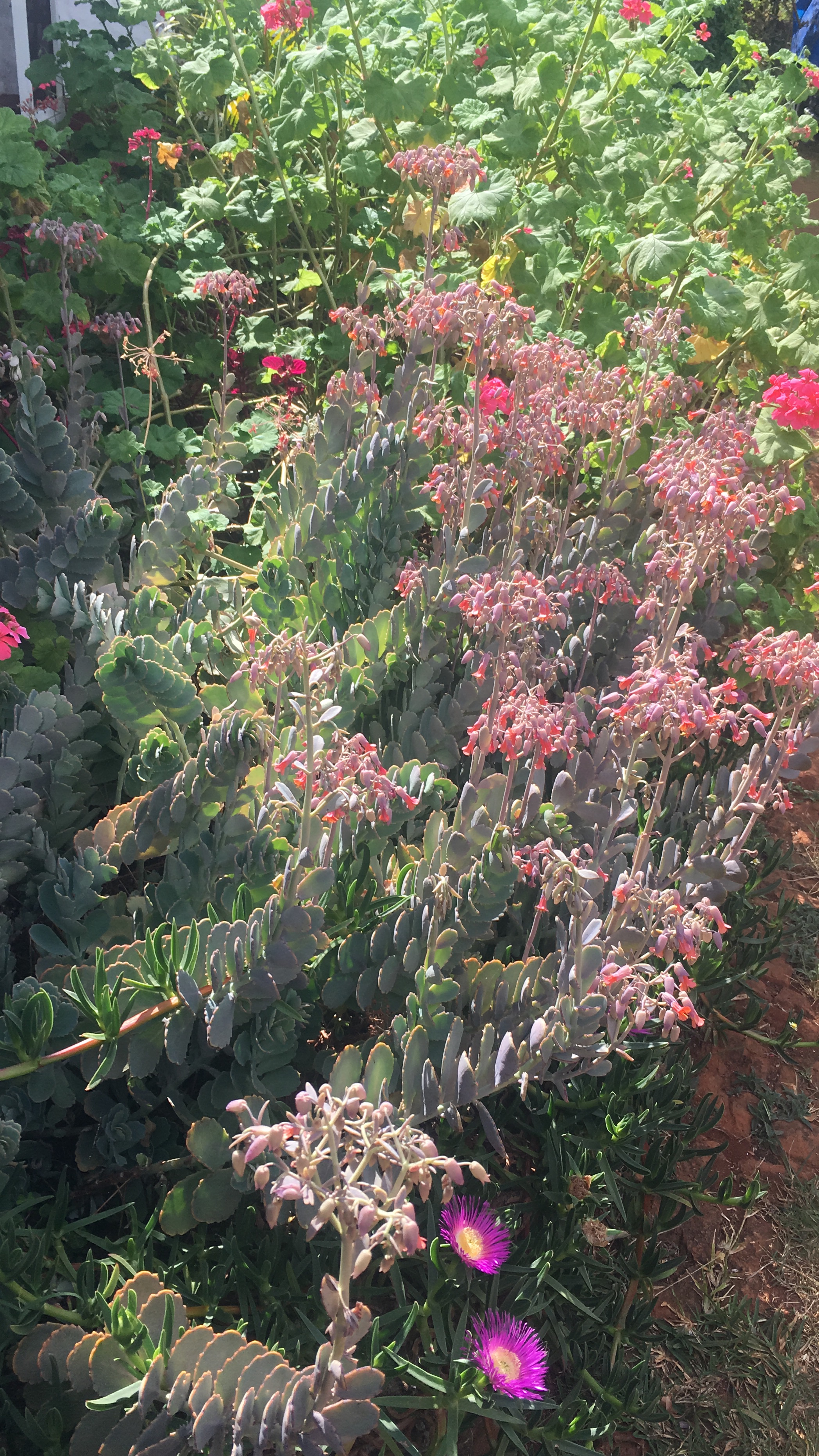
The gardens

Majete Wildlife Reserve

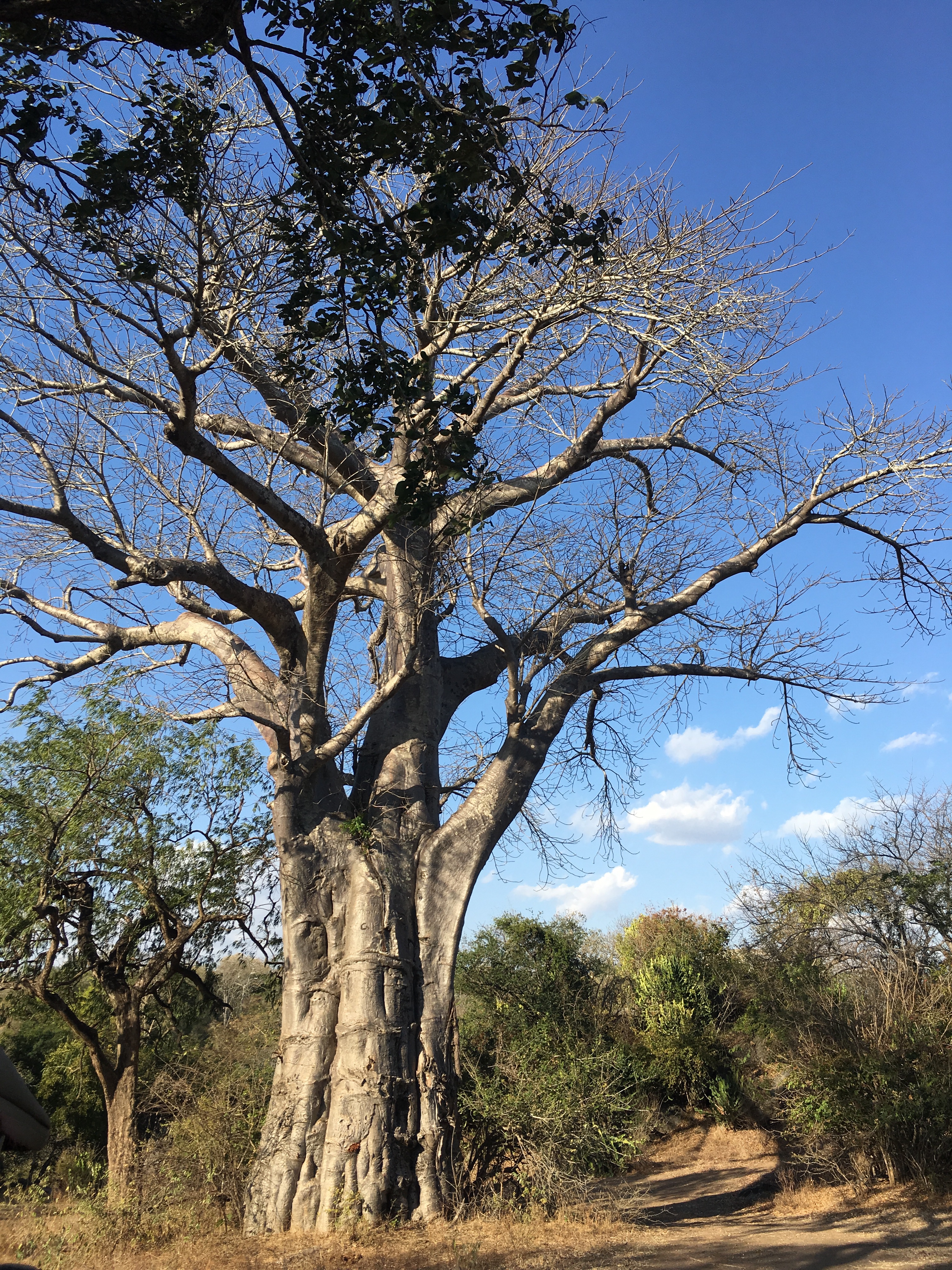
A Baobab tree

August 18: we took a day trip to Majete Wildlife Reserve, which is about 1.5 hours drive from Blantyre. It was nice to get out of the city and see some of the surrounding areas.

Majete itself is a success story of wildlife management and recovery, after efforts were made to protect its heavily poached area about 15 years ago. For those of you who are interested in its history, here is a link:

https://www.africanparks.org/the-parks/majete

These photos are not National Geographic quality since I don’t have a telephoto lens for my phone, but these are my best photos from our trip.

Adolescent elephant
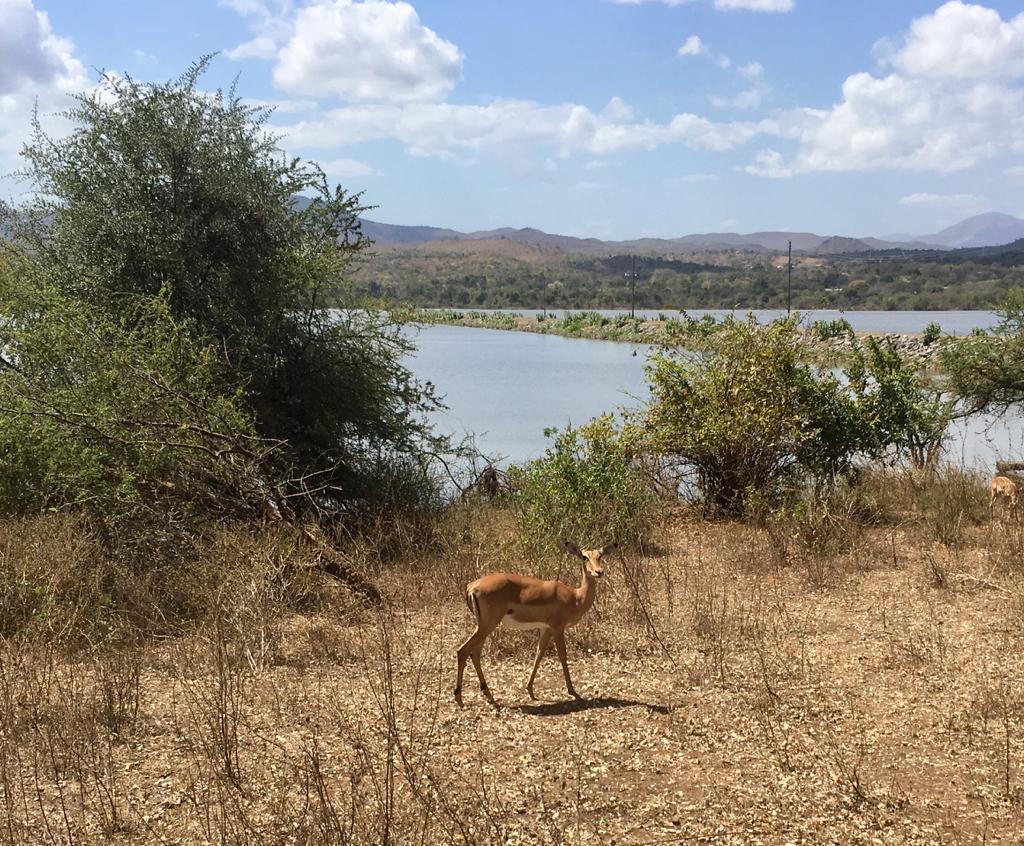
Female impala
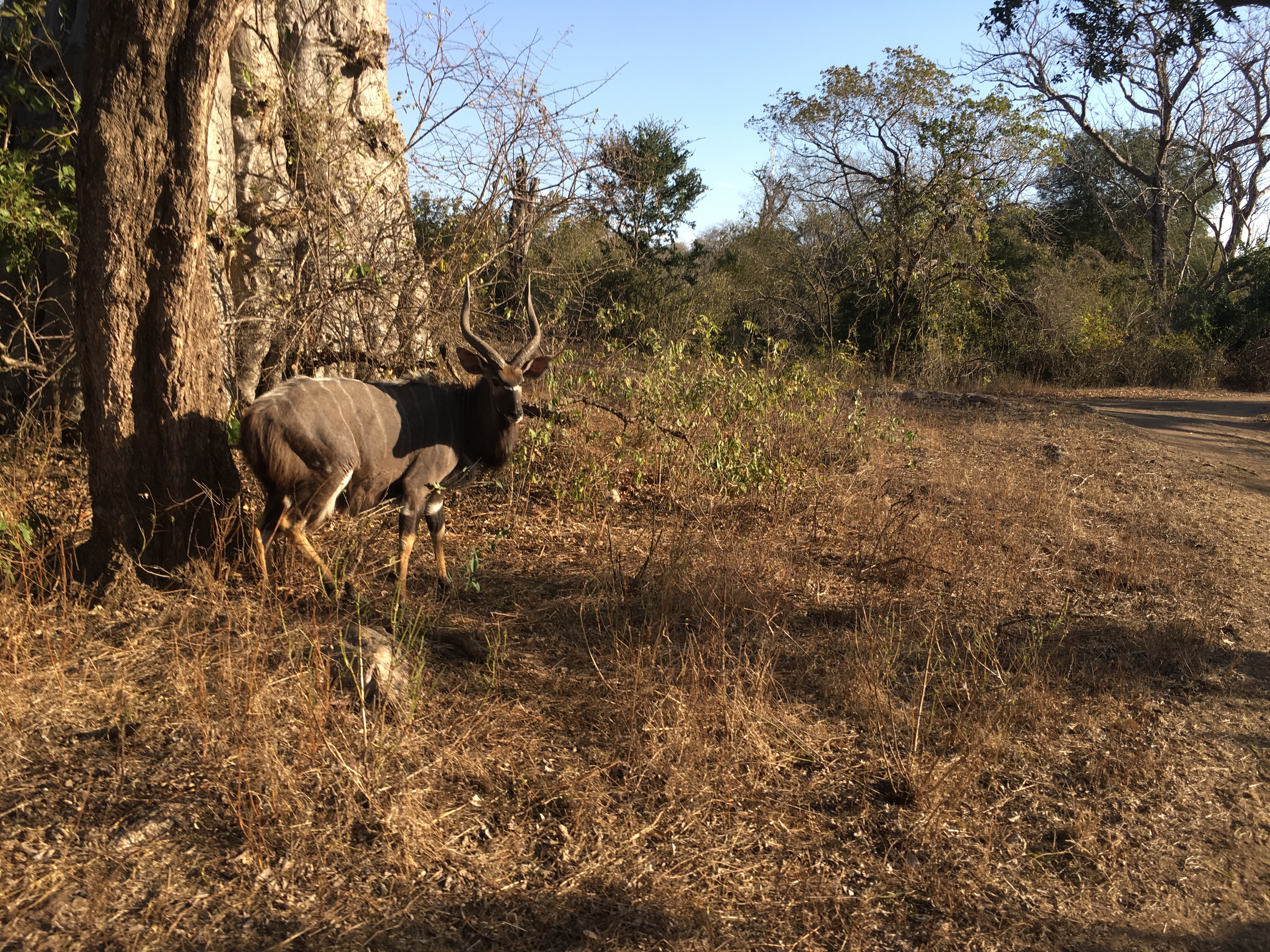
Nyala
Hippos
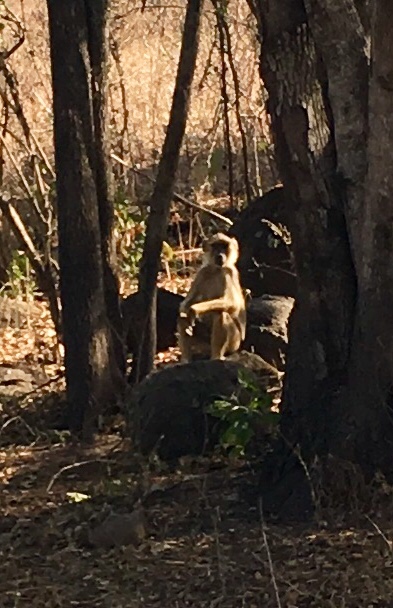
Yellow Baboon
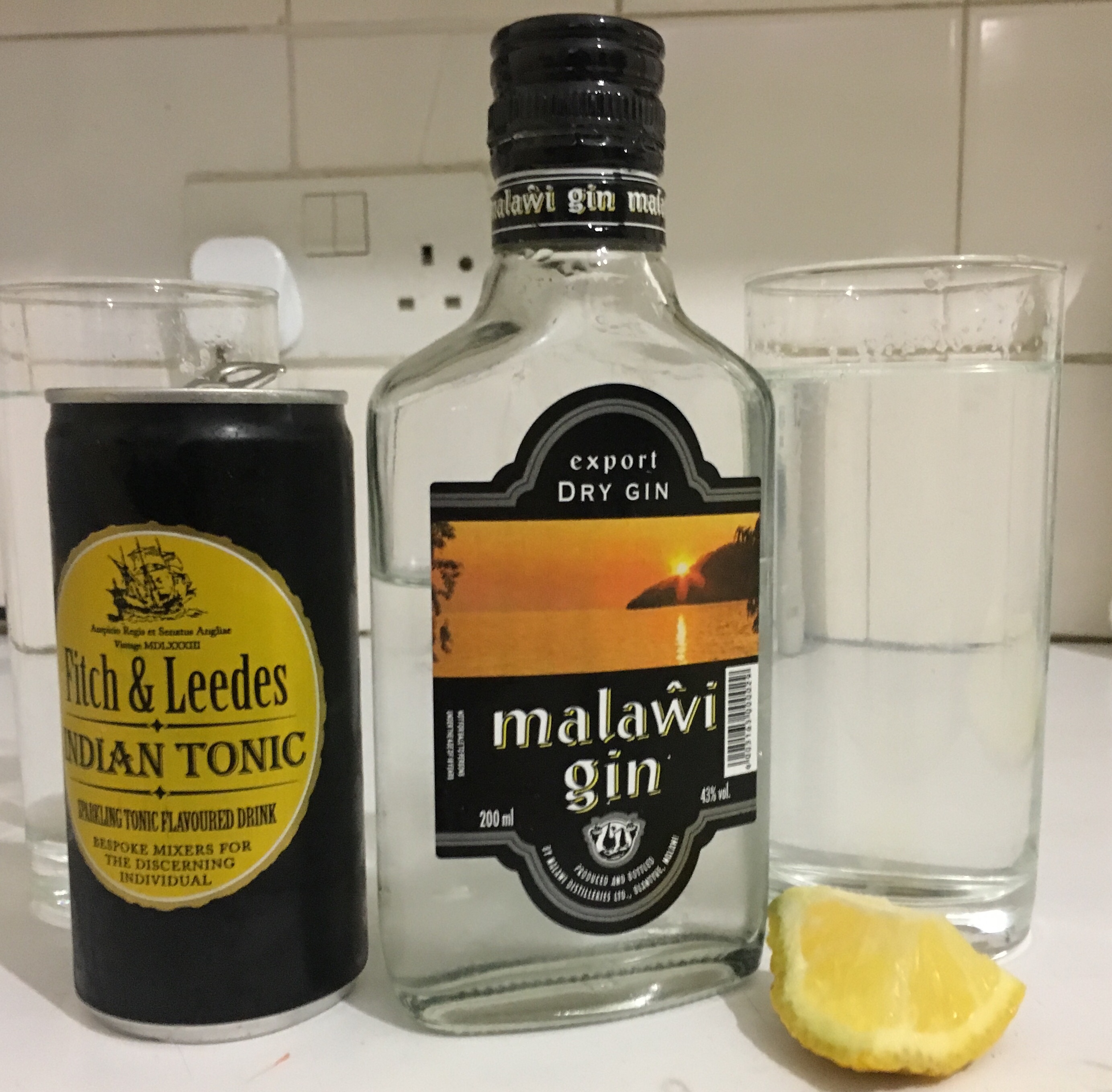
Lemons work well enough until I find some limes

Until next time, Cheers!

Friday afternoon

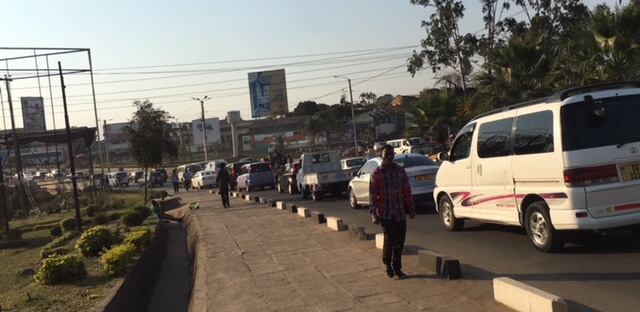
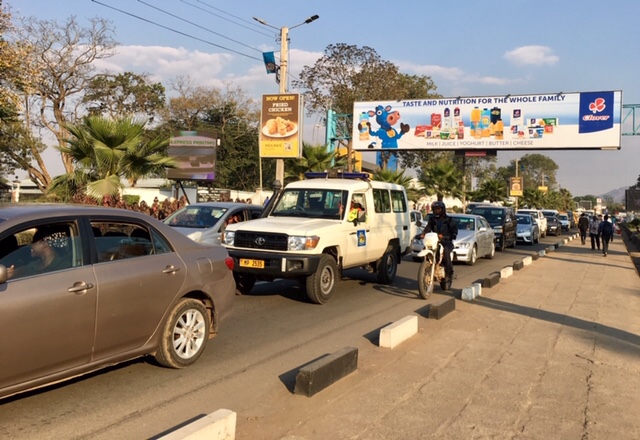
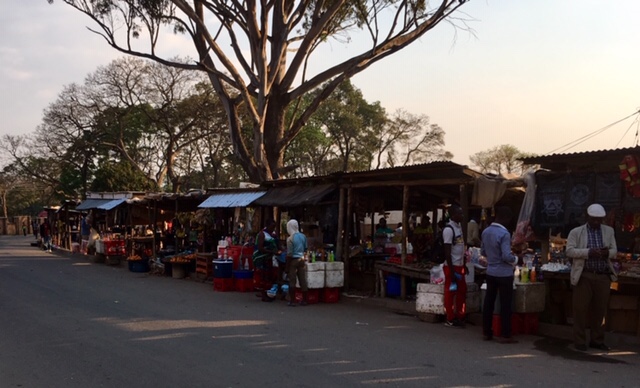
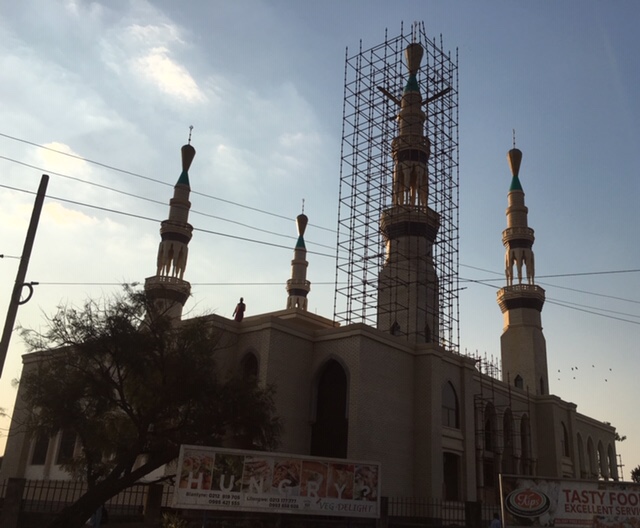
I realize that you would rather look at photos after that long post last time, so while I was walking home from downtown this afternoon, I took photos of various scenes, to give you a flavor of what Blantyre looks like.

Rush hour
Another view of rush hour, moving very slow
Looks like someone is building a big fancy house!
The market near my house.
I’m told that they have been working on this mosque for many years.
Many of the minibuses have sayings on them. My taxi driver says that it is to protect the driver and passengers. No evil arrows are going to get this one!

Off Line

This post is a bit long, so if you are a type A reader in a hurry, here’s the executive summary: I am finally back on-line after five days.

If you are still interested in how that came to be and have decided to read on, please don’t message me or leave comments with advice about what I did wrong or what I could do better next time. Believe me, I have already heard or thought of it already! I was debating about whether to name this post Misadventure in Malawi, but decided to save that snappy subtitle for something truly tragic.

On Saturday, August 3 afternoon, I was walking to the Game department store, about a 35-minute walk from my house, to join Kathy and Chris Beach for some weekend shopping. The usual people were around: happy young kids waving and yelling “Hello!, how are you?”, the groups of men, the pretty young girls, the mothers with young children tied to their backs, sometimes with slightly older children – a typical Saturday afternoon crowd. On the street, I know that I stand out and am getting used to attracting attention when I am walking, but still find it heartbreaking when a begging child follows me persistently.

I was just a few minutes away from the shopping center when a man started loudly talking what I assumed was Chichewa (but probably was his version of nonsense) and was only a few inches from my face, while making hand motions that I assumed were strident demands for a contribution. This was confusing, as the Malawian people are usually reserved and quiet and I was trying hard to get away from him. A few yards later, I slowly realized he was probably distracting me and a quick look at my backpack confirmed that it had been opened, but only my phone on the top had been taken.

If you have any connection with your phone, you will probably recognize the panic and sadness I felt.

I couldn’t call my friends to find them when I got to the shopping center, so I wandered through the store, until I found Chris and Kathy, who offered me sympathy, support, and the use of their pre-arranged taxi after shopping. Bright (don’t you love that name?), our taxi driver, took us to the main police station in town, where the police woman took my my information and told me to call on Monday to see if the police report was available to pick up then. Bright and the Beaches dropped me at my house and I realized how lonely I was without my phone.

I had also been using my phones’ data as a hot spot when I wanted to use the internet, so I was now effectively without any electronic communication for the weekend.

Shelley Brandstetter, still living in the guesthouse next door, let me use some of her data to send an email to my boss and my daughter Jessica about what had happened, and Kathy texted the Seed office in Lilongwe to notify them that I was not electronically available. I used Find My Phone app on my iPad to erase all the data from my erstwhile phone, but since it hadn’t backed up for a month, the app showed me a map of Granite Bay and my phone was nowhere on that map to be found. I went home, and since I couldn’t do any of my on-line work or streaming, decided to clean!

The next morning, Gerald Chibwana, the Operations Office from the Lilongwe Seed office, happened to be in Blantyre visiting family and was gracious enough to pick me up and take me shopping to try to find a phone, a task made harder since I was hoping to buy an iPhone and Apple products are uncommon here. (The cheaper Chinese brand phones are a much better deal.) Since it was Sunday, the AirTel (phone company) shop was closed, as were most of the stores that might carry cell phones. Luckily, Gerald led me from store to closed-electronics-store until we found one that was open and it had a used iPhone 6 in stock! I was very happy to buy their phone and was whipping out my credit card before Gerald could coolly attempt to bargain for a better price for me (the shop owners are not fools – I’m afraid my excitement undermined his efforts to save me a little money).

I brought the phone home and realized that it wasn’t much use without a SIM card or the internet, but I did have a phone again and it was a start. I did my laundry (which I do by hand, in a basin), walked to the grocery store (my shopping list had been on my phone so I worked with the memory of what I had needed). This time, I didn’t use my backpack for shopping and the quiescent phone stayed home. That evening, I read most of a book for entertainment.

At Monday morning report, my colleagues Dr. Gladys Gadama and Dr. Priscilla Mvula were sympathetic and had lots of ideas about how I could avoid being targeted again. The younger registrars were incredulous that I had ever let my cellphone leave my hands! Morning report is when the complicated patients from the day before are presented by the registrars and the list is usually long. Queen Elizabeth Central Hospital is the referral hospital for Malawi’s southern region and so the sickest patients are seen here. Each morning, we hear stories of mothers or babies dying, malaria, HIV, severe anemia, schistosomiasis, seizures – when all the hard work that the department does is noted, your only rational reaction is humility. My stolen phone was not a big problem.

Dr. Gadama helped me call the police station for follow-up. After three calls, we found out that the responsible person was out of the office, but would be available that afternoon. (As of this writing, I still haven’t collected my police report, mostly because I couldn’t contact them.)

After morning report, my colleagues recommended I start off to the AirTel office and get a new SIM card. Maybe I could even invest in a WiFi connection while I was there, to have a better back-up plan next time? I walked to the office, with my hand firmly on my purse the entire time. I told my story to the customer service rep, who arranged for me to continue with my same phone number and told me that the SIM card would start working in 10 or 15 minutes. I joined another line to buy the WiFi modem and then another line for its SIM card. One of the reps lent me the paper clip to open up my phone’s SIM card slot and I crossed my fingers.

Twenty minutes later the AirTel sign showed up in the upper left corner of my phone! I tried to use it – but no luck. Another consultation with the rep – maybe it was because I hadn’t yet signed this phone into my Apple account? I took the phone to the electronics store where I had bought it, hoping it would be an easy fix. The shopkeeper remembered me and let me use his WiFi so I could sign into my new phone, but Apple wouldn’t let me sign into my new phone with my Apple ID unless I verified my account with one of my trusted other accounts and I hadn’t thought to bring my iPad along with me.

I was feeling frustrated, so went for lunch. Fish shawarma sounded like a new adventure, so I tried it to distract myself. After eating, the phone still wasn’t working, my frustration mounted and I felt like I needed a win. Since I couldn’t watch funny animal videos or send kissy face emoji messages to Jessica, it was time for retail therapy. I went to ShopRIte and bought the overpriced dish drainer I had been thinking about buying for a while. I was more excited about the dish drainer after I walked home, since I could use it right away and I was feeling pessimistic about my phone ever working again.
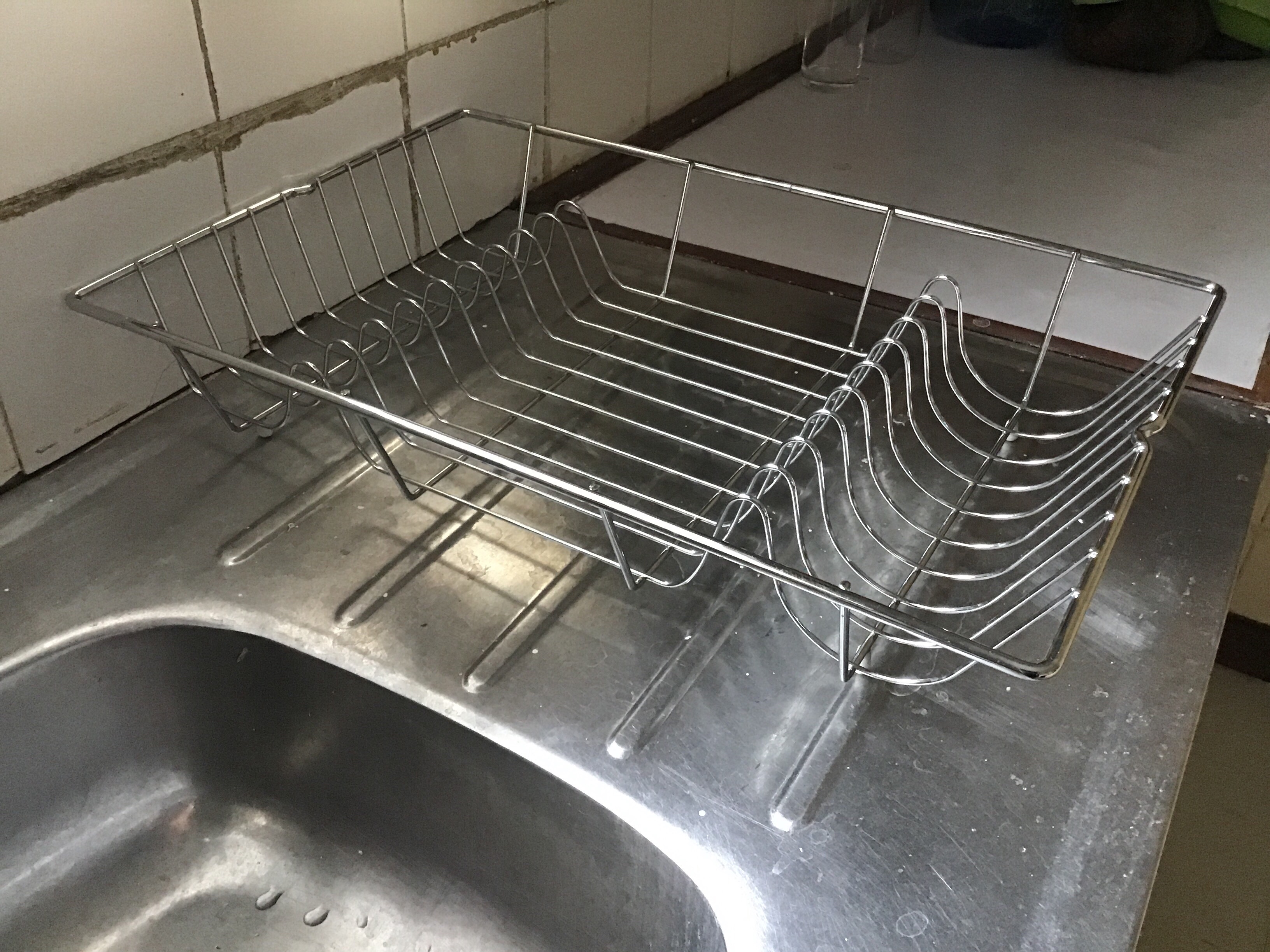
The overpriced dish drainer

Once I got home, the modem needed to be charged before I could use it, so I charged it up. No WiFi meant I still couldn’t sign into my phone. That evening, Shelley came to my WiFi data rescue again and I signed into my Apple account, but sadly, the phone refused to call, receive messages, or even allow me to add more money to my account. The modem had refused to respond to my repeated efforts to get it to work as well. My electronic life was a big error message. I went home and washed dishes. At least the dish drainer continued to bring me joy.

The next morning, it was clear that not being available by phone or WhatsApp was a problem for my job. After Tuesday’s morning report, Dr. Gladys Gadama came to find me and take me to a meeting that had been announced by a WhatsApp group chat that I had missed. I had offered to work with Dr. Mvula while she was on call that day, but she wasn’t able to contact me when I was needed, so that wasn’t working. There was a big political demonstration scheduled on Tuesday and all the shops in town were closed, so the next visit to AirTel would have to wait. I stayed on the College of Medicine campus and went to an exams meeting and attended a very busy afternoon Gyn clinic. During the day, each one of my colleagues tried various remedies to make my new phone work, but it stubbornly continued its error message ways. I was secretly relieved that its problem wasn’t me. 

Wednesday morning, I packed up everything that I might need at the AirTel store: all my receipts, SIM cards, modem, phone, cords, and my passport. After morning report, I walked to the AIrTel office and found a small crowd waiting for it to open at 10. Apparently, the day after the demonstrations is a busy day for all the stores. After standing in four lines and talking to five customer service reps, a little over an hour later, I walked out with a working phone and modem! I had more than a 100 emails to answer and 23 WhatsApp messages to catch up. It’s good to be connected again!

Now maybe I can get back to work.
Moving in

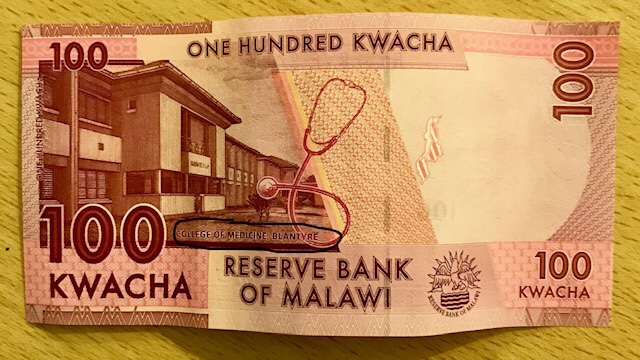
The College of Medicine is featured on the back of a 100 kwacha bill. How cool is that?
July 22- 31: I was introduced to the University of Malawi College of Medicine Department of Ob/Gyn on Monday, July 22. Fortunately, Dr. Luis Gadama picked me up that morning, drove the short distance to the hospital and led me to the department, because it would have taken much wandering around the hospital before I would have found my own way.

Weekday mornings at my new department usually begin with the morning report, where the registrars (similar to residents in the US medical system) present the more complicated patients and what happened to them during the previous day. Morning report is held in a large, empty classroom and on that first morning, I couldn’t follow the presentations well. My ears are not yet trained so that I can understand what is being said with a Malawian accent without close concentration. Even in good conditions, my age means that I have less than perfect hearing. On top of that, the room was large and echoey, so it was an embarrassing struggle for me as I tried to figure out what was going on during the presentations.

(It has gotten easier since then. I know that I need to sit close and facing the presenters and I have admitted to my confusion so that most people are kindly speaking up and visually checking in with me to see how well I am following what they are saying.)

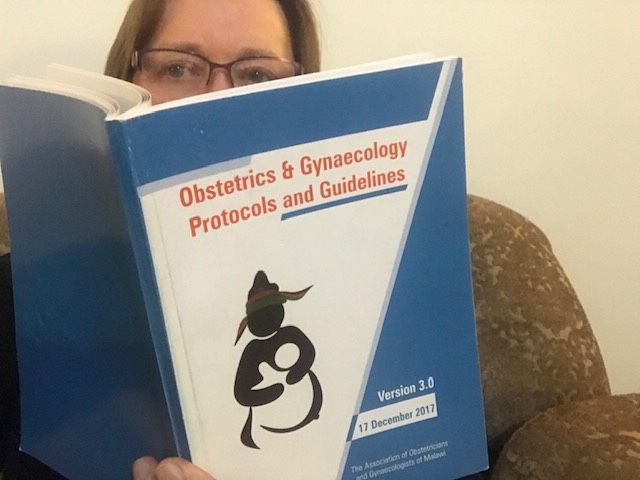
After morning report, the on-call physician “rounds” with the registrars, and a plan is discussed at the patients’ bedsides. My attempt to orient here means that I have been following along with the rounds and am trying to absorb as much as possible about standards of care and treatment options. When the medical students return to the Medical School in late August, bedside teaching rounds will be one of my responsibilities and there is so much for me to learn before then! I hope to write about some of the medical issues later on, when I better understand the what and why of the Malawian system. For now, I am trying to see as much as possible and studying the Protocols and Guidelines.

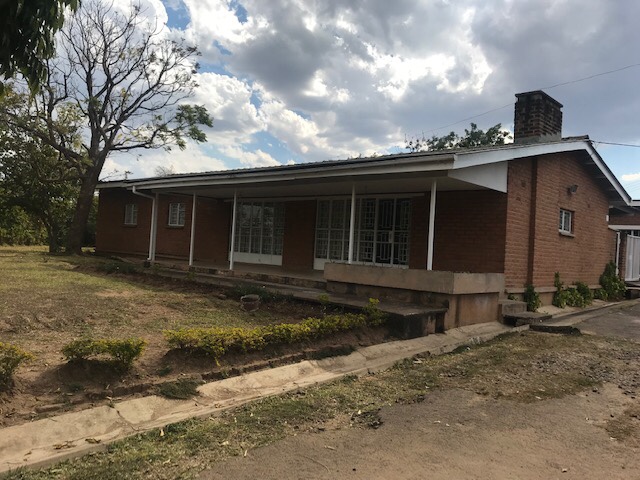
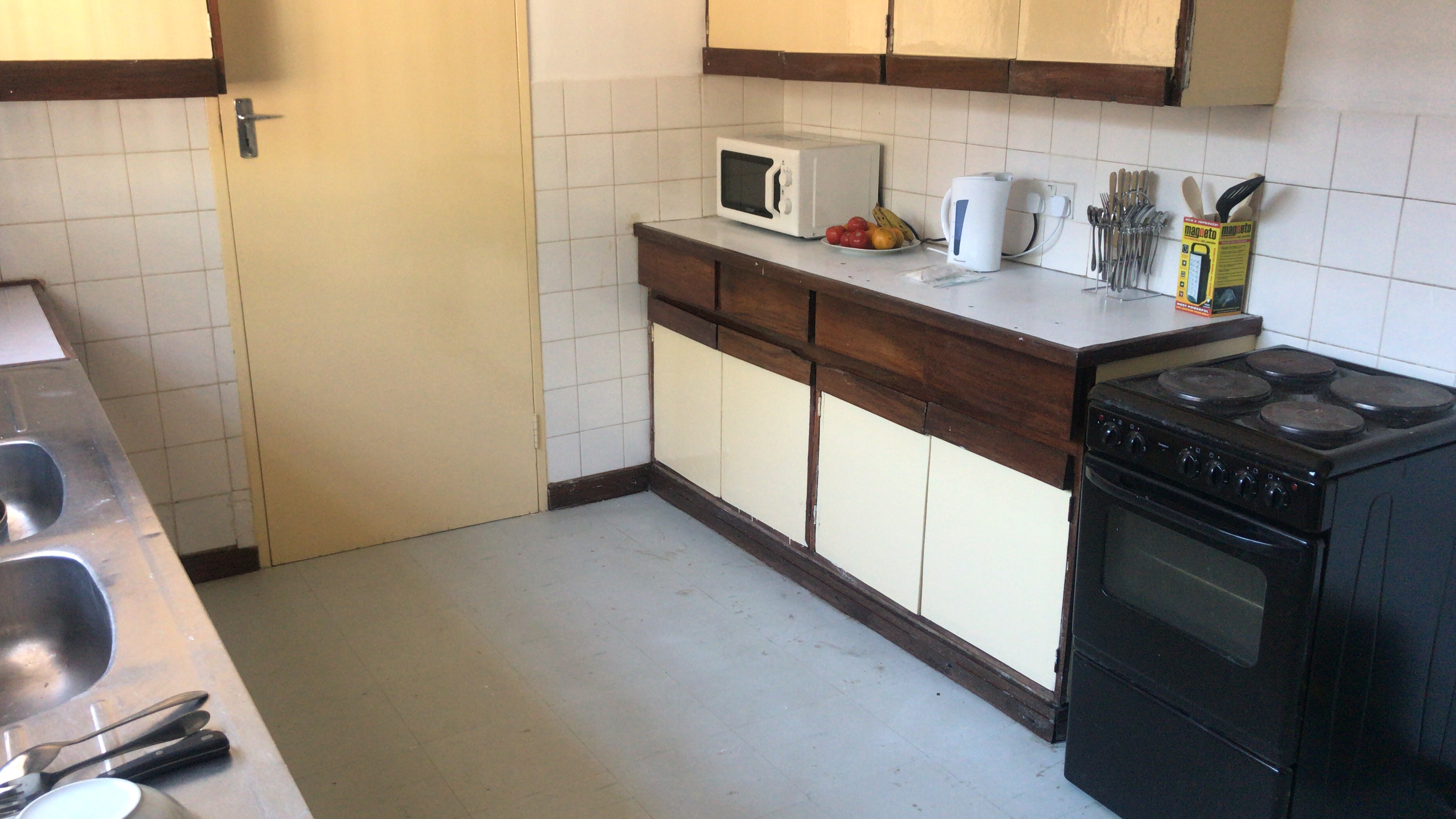
My assigned house is next to the guesthouse where I had been staying, so my move on July 25 was several short walks, dragging suitcases and bags. Dr. Gladys Gadama had advised me on what to buy and helped me pick out the best values during an extended shopping trip the day before, so I had a few things to furnish my three-bedroom, 2.5-bathroom home. The house had been vacant for a while and repairs were still in progress when I moved in. I am working on getting the house in order and more comfortable, in anticipation of visitors!

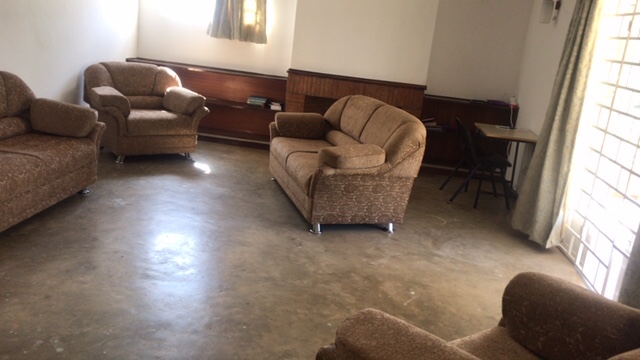
My house, kitchen and front room


Professor William Stones and his wife, Shirley, have been very kind and taken on the role of helping me figure out Blantyre. They have lived here for 5.5 years and so can advise me on practically anything. Since they are also expatriates, I’m not embarrassed to ask them questions about things that my Malawian colleagues might not realize are confusing to me. They also convinced me to join Facebook, since that is how the expat community communicates here in Blantyre and I’m on the lookout for inexpensive furniture and interesting community events. If you are on Facebook, I apologize in advance for not being a good Facebook friend. (I am enjoying seeing your photos, though!)

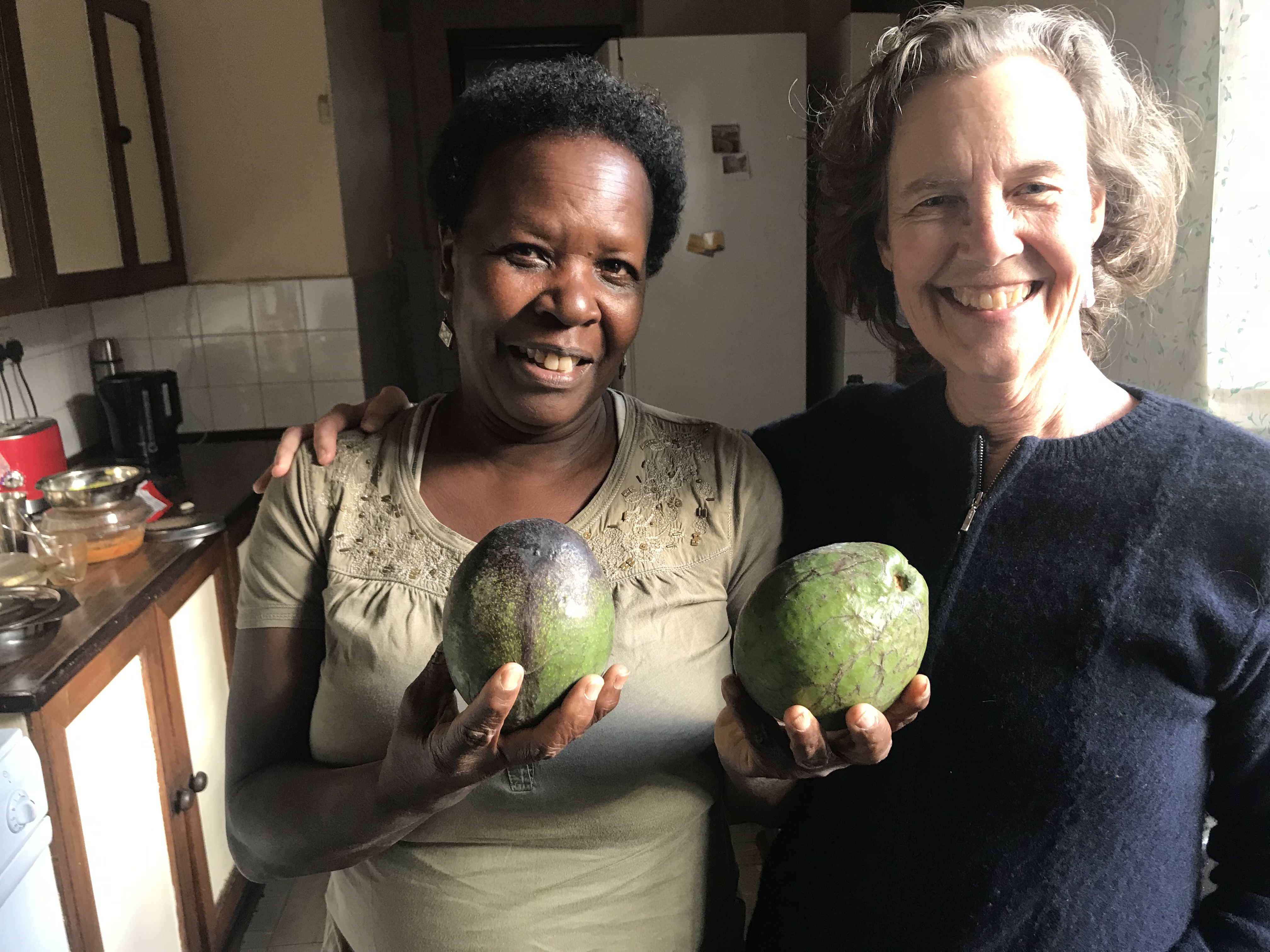
Shirley Stones (L) shows off her avocados from her tree, with Kathy Beach.

Blantyre, Malawi

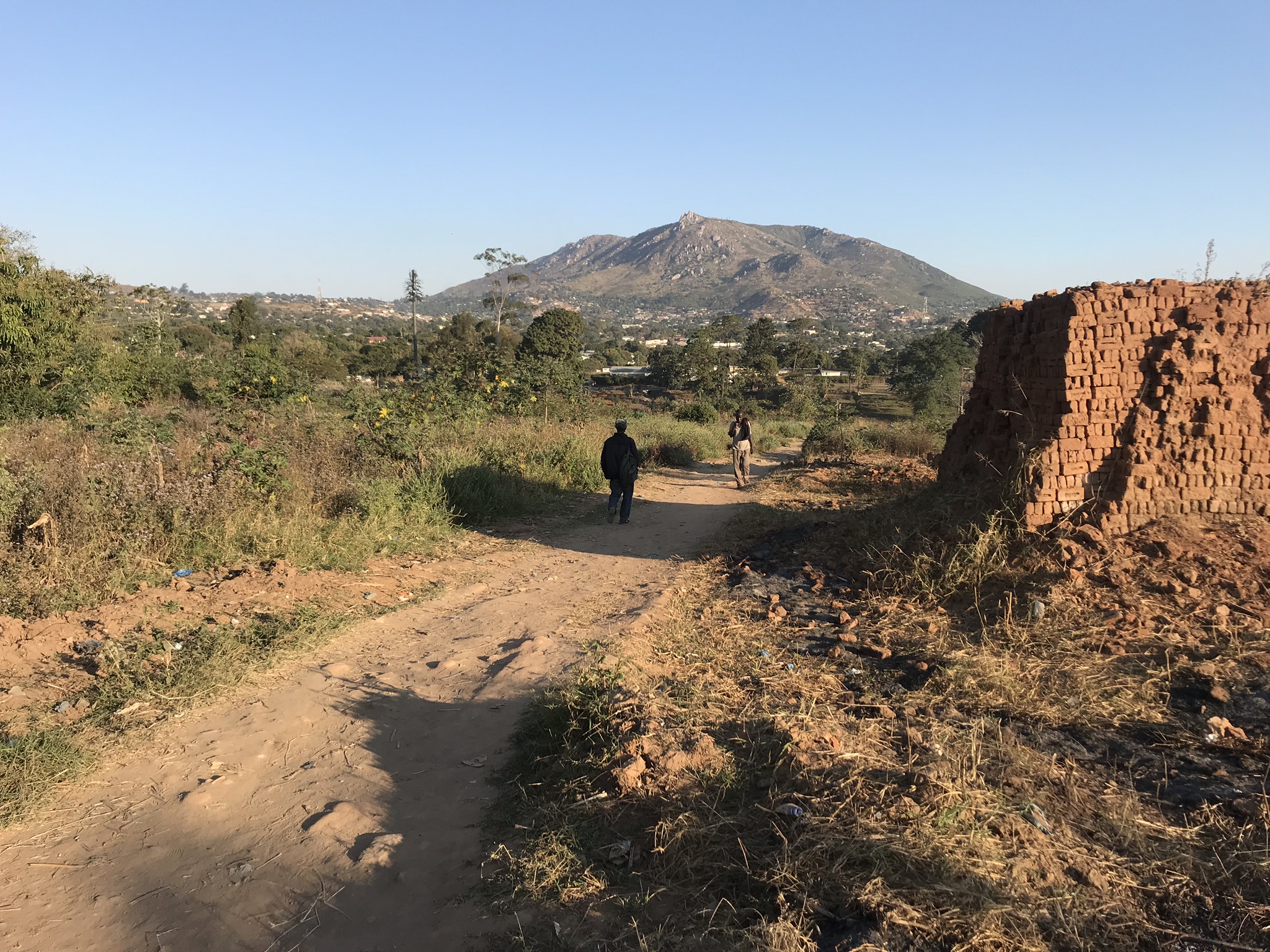
Near the College of Medicine campus

July 20-25:  A 35-minute airplane ride brought us to Blantyre and our first look at the city where we plan to spend the next year.  Upon arrival, I was told that the house that I will be living at is not yet ready, so I would be staying at the College of Medicine’s  guest house for about a week while my house is prepared.

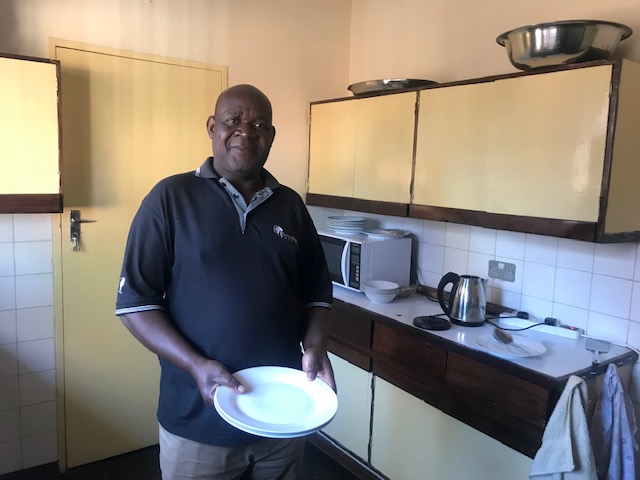
The guest house is attached to the College of Medicine campus and the Queen Elizabeth Central Hospital, so it turned out to be about a 15 minute walk from my new office in the Ob/Gyn department there.  We were greeted by the friendly caretaker, Kingsley Afilu, who made sure that we were fed filling meals at least three times a day.  When I told him that I would like more vegetables and explained that I tried to not eat meat, he seemed truly perplexed but later treated me to a delicious meal of rice and beans.  He was delighted to pose for a photo for “all my friends back home” and told me “welcome to Malawi” as I was taking the photo, even though I had been staying there for five days.  He is a gracious host and an unselfconscious expert at hospitality.

Kingsley Afilu, our caretaker at the guesthouse

Shelley Brandstetter and I were settled into the guesthouse and Kathy and Chris Beach were taken to an apartment nearby.  On Sunday afternoon, Dr. Luis Gadama, Dr. Gladys Gadama, and Dr. Priscilla Mvula drove us around for a highlight tour of Blantyre, focusing on the hospital departments, grocery stores, and businesses that we might need while we found our way around.   The usual transport for us and many people here is walking.   Many local people use minibuses (which are packed and very speedy!) for longer distances, but we were warned off the minibuses by our advisors, so we use the local taxi drivers after dark and for longer or large shopping trips.

Sunday night, Shelley and I met the other guesthouse guests: two medical students from the Royal College of Surgeons in Ireland, doing a six-week rotation here in Malawi.  They were coming back from an enjoyable weekend at Lake Malawi and enthusiastically encouraged us to visit it.  One of the med students, Cathy Keegan, is doing research on the surgical outcomes of different groups of health care workers here.  (Later on, I learned that she had spent a year in Sacramento, California a few years ago, but had no memory of a place called Granite Bay.)

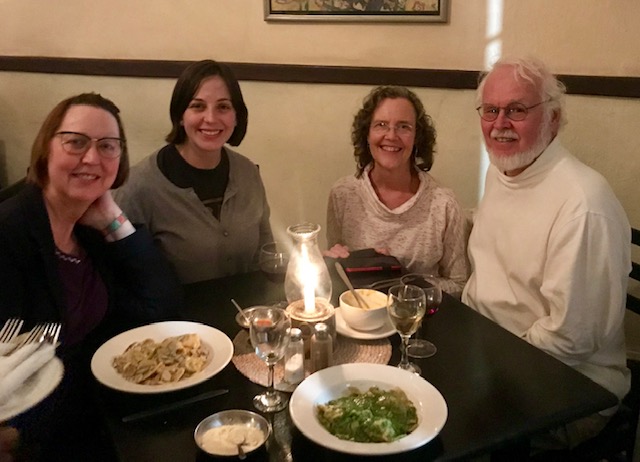
Kathy Beach is a Seed midwife, working to help organize and set up a midwife delivery unit here at Queen Elizabeth Central Hospital and teach the midwifery students.  Her husband Chris likes to refer to himself as a “trailing dependent,” since that is how Seed refers to him, but he has been a Peace Corps volunteer and schoolmaster in Kenya, a perpetual student, a lawyer, and most recently, a psychotherapist and ethics professor.  While Chris is here in Malawi, he hopes to finish his book of poems and hinted that a poem may be written about any of us on the Seed team.  He celebrated his 70th birthday on July 24, during our first week on site, and we all went out to dinner to celebrate him and his adventurous life, our new home, and our friendship.

Me, Shelley Brandstetter, Kathy Beach, and birthday boy Chris Beach.